
AMS01:00
AMS01:00
AMS01:00

eCommerce ﹥ Shopify B2B

SHOPIFY B2B FOR COMPANIES THAT NEED MORE THAN A WHOLESALE PORTAL

B2B commerce is not just a hidden price list. Customers expect the right catalogue, contract pricing, payment terms, ordering options and account permissions. Internal teams expect orders, stock, product data and finance to stay connected. Flatline designs, implements and integrates Shopify B2B for growing and enterprise companies.

eCommerce ﹥ Shopify B2B

SHOPIFY B2B FOR COMPANIES THAT NEED MORE THAN A WHOLESALE PORTAL

B2B commerce is not just a hidden price list. Customers expect the right catalogue, contract pricing, payment terms, ordering options and account permissions. Internal teams expect orders, stock, product data and finance to stay connected. Flatline designs, implements and integrates Shopify B2B for growing and enterprise companies.

eCommerce ﹥ Shopify B2B

SHOPIFY B2B FOR COMPANIES THAT NEED MORE THAN A WHOLESALE PORTAL

B2B commerce is not just a hidden price list. Customers expect the right catalogue, contract pricing, payment terms, ordering options and account permissions. Internal teams expect orders, stock, product data and finance to stay connected. Flatline designs, implements and integrates Shopify B2B for growing and enterprise companies.

Stoov homepage on desktop with an outdoor heated cushion campaign
Stoov webshop on mobile with a heated cushion product page
Shopify analytics dashboard with sales and conversion overview

Blended or separate B2B store?

Shopify B2B supports companies, locations, catalogues, price agreements, payment terms and business accounts. With Markets you can group B2B customers for different content, currencies, taxes, themes, prices and product availability. We help decide whether a blended B2C and B2B store or a separate B2B store fits better, then design the customer journey and connect ERP, PIM, CRM, fulfilment and finance where needed.

PROVEN
RESULTS
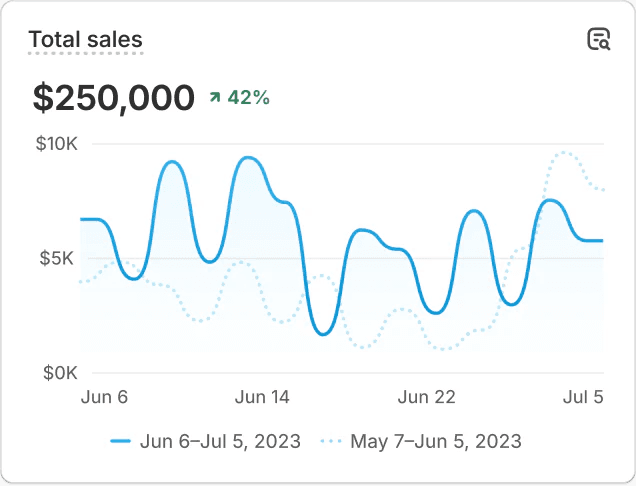
Shopify total sales chart showing 42 percent growth

TOTAL SALES VS. PREVIOUS PERIOD

+42%

+42%

+42%

+42%

+42%

+42%

Three men in summer fashion on a harbour quay

We build and grow digital platforms for brands that expect their commerce to perform, from fashion and beauty to mobility and consumer electronics. These are some of the companies we work with.

We build and grow digital platforms for brands that expect their commerce to perform, from fashion and beauty to mobility and consumer electronics. These are some of the companies we work with.

We build and grow digital platforms for brands that expect their commerce to perform, from fashion and beauty to mobility and consumer electronics. These are some of the companies we work with.

When Shopify B2B fits your organisation

Attendees listening to a talk at a Flatline eCommerce event
Office entrance with a glass meeting booth
Two colleagues discussing work at their desks

Global disruptor in custom development & end-to-end production partner

WHEN SHOPIFY B2B FITS

Shopify B2B is relevant when business customers should be able to order online without losing commercial agreements or internal control. Typically: orders still arrive by email or Excel, customers have their own assortments and prices, one company has several locations and buyers, or your ERP and PIM stay the owner of customer, product and price data.

Family with two young children next to an electric cargo bike in front of a townhouse

When Shopify B2B fits your organisation

Attendees listening to a talk at a Flatline eCommerce event
Office entrance with a glass meeting booth
Two colleagues discussing work at their desks

Global disruptor in custom development & end-to-end production partner

WHEN SHOPIFY B2B FITS

Shopify B2B is relevant when business customers should be able to order online without losing commercial agreements or internal control. Typically: orders still arrive by email or Excel, customers have their own assortments and prices, one company has several locations and buyers, or your ERP and PIM stay the owner of customer, product and price data.

Family with two young children next to an electric cargo bike in front of a townhouse

When Shopify B2B fits your organisation

Attendees listening to a talk at a Flatline eCommerce event
Office entrance with a glass meeting booth
Two colleagues discussing work at their desks

Global disruptor in custom development & end-to-end production partner

WHEN SHOPIFY B2B FITS

Shopify B2B is relevant when business customers should be able to order online without losing commercial agreements or internal control. Typically: orders still arrive by email or Excel, customers have their own assortments and prices, one company has several locations and buyers, or your ERP and PIM stay the owner of customer, product and price data.

Family with two young children next to an electric cargo bike in front of a townhouse
Mason Garments, selling B2B and B2C on Shopify Plus

Accounts, catalogues and pricing

In Shopify B2B, a business customer is set up as a company with one or more locations. Each location can have its own addresses, contacts, permissions, catalogues, tax settings and checkout terms. We design who creates accounts, who approves new buyers, which roles exist and how sales or service handle the exceptions that never fit a standard flow.

Catalogues give business customers their own products and prices. The hard question is rarely how a price gets into Shopify. It is which system owns that price, and how conflicts between systems are prevented. Before anything is built, we agree on:

  • The price source and the order in which price rules apply

  • How customers or markets are assigned to catalogues

  • Assortment per customer, including minimum quantities and order increments

  • Currency and tax display per market

  • How often data synchronises, and what happens when a sync fails

  • Exceptions for contract customers and negotiated agreements

Payment terms and checkout rules often differ from consumer orders. What is possible depends on your Shopify plan, the market, the payment method and your finance process. We test the normal orders and the awkward ones: credit limits, partial deliveries, backorders, tax exemptions, failed syncs and manual corrections by your team.

B2B and B2C on Shopify

F.A.Q.

We’d love to answer all your questions

What does a Shopify B2B implementation cost?

It depends on your price logic, the number of integrations, how many markets and catalogues you run, how much custom work is needed and how clean your customer data is. Your Shopify plan plays a role too, and Shopify regularly changes which B2B features sit in which plan. That is why we start with a fit-gap: it turns requirements into a scoped estimate instead of a guess.

How long does a Shopify B2B project take?

There is no standard timeline. The main factors are the number of systems to connect, the state of your customer and price data, the choice between a blended or separate store, and how much time your own teams have for reviews and acceptance. After the fit-gap you get a phased plan that spells out the dependencies that determine the launch date.

What are the biggest risks in a B2B launch?

Usually not the storefront itself. The risks sit in price conflicts between systems, integration errors nobody notices, business customers who never activate their account, and exceptions that were never tested, such as credit limits or partial deliveries. We reduce them with clear data ownership, monitoring, a separate test of account activation and acceptance scenarios for each department.

Can Shopify connect to our ERP or PIM?

Often yes, through an existing connector, an integration platform or a custom integration. Which route fits depends on the APIs your systems offer, data volumes, the direction of each data flow, how fast updates must arrive and how errors are handled. We assess this during discovery, so you know what is feasible before development starts.

What happens after the B2B store goes live?

Launch is when adoption starts. We track activated accounts, online order share, repeat orders, self-service use, service contacts and integration errors, and compare customer groups and markets rather than one total number. Those findings feed a backlog of improvements, from account onboarding to reordering. Who monitors integrations and handles support after go-live is agreed before launch.

F.A.Q.

We’d love to answer all your questions

What does a Shopify B2B implementation cost?

It depends on your price logic, the number of integrations, how many markets and catalogues you run, how much custom work is needed and how clean your customer data is. Your Shopify plan plays a role too, and Shopify regularly changes which B2B features sit in which plan. That is why we start with a fit-gap: it turns requirements into a scoped estimate instead of a guess.

How long does a Shopify B2B project take?

There is no standard timeline. The main factors are the number of systems to connect, the state of your customer and price data, the choice between a blended or separate store, and how much time your own teams have for reviews and acceptance. After the fit-gap you get a phased plan that spells out the dependencies that determine the launch date.

What are the biggest risks in a B2B launch?

Usually not the storefront itself. The risks sit in price conflicts between systems, integration errors nobody notices, business customers who never activate their account, and exceptions that were never tested, such as credit limits or partial deliveries. We reduce them with clear data ownership, monitoring, a separate test of account activation and acceptance scenarios for each department.

Can Shopify connect to our ERP or PIM?

Often yes, through an existing connector, an integration platform or a custom integration. Which route fits depends on the APIs your systems offer, data volumes, the direction of each data flow, how fast updates must arrive and how errors are handled. We assess this during discovery, so you know what is feasible before development starts.

What happens after the B2B store goes live?

Launch is when adoption starts. We track activated accounts, online order share, repeat orders, self-service use, service contacts and integration errors, and compare customer groups and markets rather than one total number. Those findings feed a backlog of improvements, from account onboarding to reordering. Who monitors integrations and handles support after go-live is agreed before launch.

F.A.Q.

We’d love to answer all your questions

What does a Shopify B2B implementation cost?

It depends on your price logic, the number of integrations, how many markets and catalogues you run, how much custom work is needed and how clean your customer data is. Your Shopify plan plays a role too, and Shopify regularly changes which B2B features sit in which plan. That is why we start with a fit-gap: it turns requirements into a scoped estimate instead of a guess.

How long does a Shopify B2B project take?

There is no standard timeline. The main factors are the number of systems to connect, the state of your customer and price data, the choice between a blended or separate store, and how much time your own teams have for reviews and acceptance. After the fit-gap you get a phased plan that spells out the dependencies that determine the launch date.

What are the biggest risks in a B2B launch?

Usually not the storefront itself. The risks sit in price conflicts between systems, integration errors nobody notices, business customers who never activate their account, and exceptions that were never tested, such as credit limits or partial deliveries. We reduce them with clear data ownership, monitoring, a separate test of account activation and acceptance scenarios for each department.

Can Shopify connect to our ERP or PIM?

Often yes, through an existing connector, an integration platform or a custom integration. Which route fits depends on the APIs your systems offer, data volumes, the direction of each data flow, how fast updates must arrive and how errors are handled. We assess this during discovery, so you know what is feasible before development starts.

What happens after the B2B store goes live?

Launch is when adoption starts. We track activated accounts, online order share, repeat orders, self-service use, service contacts and integration errors, and compare customer groups and markets rather than one total number. Those findings feed a backlog of improvements, from account onboarding to reordering. Who monitors integrations and handles support after go-live is agreed before launch.

Planning B2B on Shopify?

Tell us how your business customers order today and which systems hold prices and stock. We reply with a first view on what Shopify B2B handles natively and what needs an integration.

By signing up you agree with our privacy policy

What do they say

4.9 out of 5 · 145 reviews

Google reviews
Clutch reviews
Sortlist reviews
Shopify Partner Directory reviews

What do they say

4.9 out of 5 · 145 reviews

Google reviews
Clutch reviews
Sortlist reviews
Shopify Partner Directory reviews

What do they say

4.9 out of 5 · 145 reviews

Google reviews
Clutch reviews
Sortlist reviews
Shopify Partner Directory reviews

We’d love to hear about your project.

We’d love to hear about your project.

We’d love to hear about your project.