
AMS01:00
AMS01:00
AMS01:00

eCommerce ﹥ Shopify migration

MIGRATE TO SHOPIFY WITHOUT LOSING YOUR COMMERCE OPERATION

A migration to Shopify is more than importing products and customers. You replace a platform while orders, marketing, fulfilment, product data, analytics and organic traffic all have to keep working. Flatline guides growing and enterprise brands through replatforming to Shopify and Shopify Plus, from data and redirects to integrations, QA and post-launch monitoring.

eCommerce ﹥ Shopify migration

MIGRATE TO SHOPIFY WITHOUT LOSING YOUR COMMERCE OPERATION

A migration to Shopify is more than importing products and customers. You replace a platform while orders, marketing, fulfilment, product data, analytics and organic traffic all have to keep working. Flatline guides growing and enterprise brands through replatforming to Shopify and Shopify Plus, from data and redirects to integrations, QA and post-launch monitoring.

eCommerce ﹥ Shopify migration

MIGRATE TO SHOPIFY WITHOUT LOSING YOUR COMMERCE OPERATION

A migration to Shopify is more than importing products and customers. You replace a platform while orders, marketing, fulfilment, product data, analytics and organic traffic all have to keep working. Flatline guides growing and enterprise brands through replatforming to Shopify and Shopify Plus, from data and redirects to integrations, QA and post-launch monitoring.

Stoov homepage on desktop with an outdoor heated cushion campaign
Stoov webshop on mobile with a heated cushion product page
Shopify analytics dashboard with sales and conversion overview

What a migration plan covers

A migration is not an export-and-import job. Our plan covers an inventory of data, apps, integrations and custom work; URL mapping and redirects; product, customer and order migration; rebuilding or replacing integrations; analytics, consent and feed validation; functional, content and SEO QA; and launch with monitoring and a rollback plan. The goal is not to rebuild the old platform one to one, but to keep what has value and remove technical debt along the way.

PROVEN
RESULTS
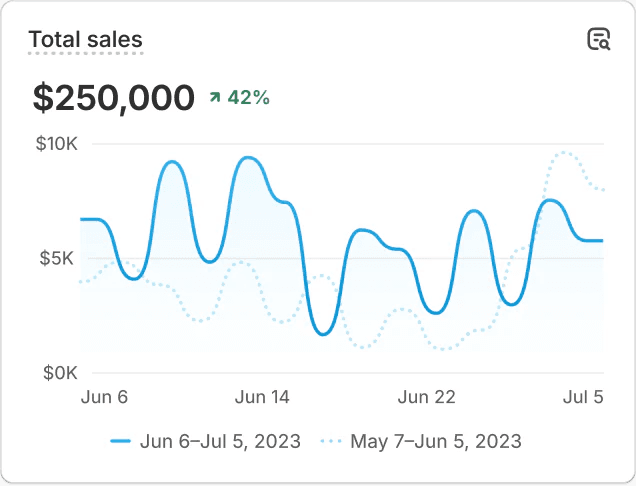
Shopify total sales chart showing 42 percent growth

TOTAL SALES VS. PREVIOUS PERIOD

+42%

+42%

+42%

+42%

+42%

+42%

Three men in summer fashion on a harbour quay

We build and grow digital platforms for brands that expect their commerce to perform, from fashion and beauty to mobility and consumer electronics. These are some of the companies we work with.

We build and grow digital platforms for brands that expect their commerce to perform, from fashion and beauty to mobility and consumer electronics. These are some of the companies we work with.

We build and grow digital platforms for brands that expect their commerce to perform, from fashion and beauty to mobility and consumer electronics. These are some of the companies we work with.

When migrating to Shopify makes sense

Attendees listening to a talk at a Flatline eCommerce event
Office entrance with a glass meeting booth
Two colleagues discussing work at their desks

Global disruptor in custom development & end-to-end production partner

WHEN TO REPLATFORM

Replatforming is worth it when the current platform demonstrably blocks the next growth phase. Releases are slow or risky, maintenance costs keep rising, teams do too much by hand, international growth gets complicated, or the storefront no longer matches how customers actually buy.

Family with two young children next to an electric cargo bike in front of a townhouse

When migrating to Shopify makes sense

Attendees listening to a talk at a Flatline eCommerce event
Office entrance with a glass meeting booth
Two colleagues discussing work at their desks

Global disruptor in custom development & end-to-end production partner

WHEN TO REPLATFORM

Replatforming is worth it when the current platform demonstrably blocks the next growth phase. Releases are slow or risky, maintenance costs keep rising, teams do too much by hand, international growth gets complicated, or the storefront no longer matches how customers actually buy.

Family with two young children next to an electric cargo bike in front of a townhouse

When migrating to Shopify makes sense

Attendees listening to a talk at a Flatline eCommerce event
Office entrance with a glass meeting booth
Two colleagues discussing work at their desks

Global disruptor in custom development & end-to-end production partner

WHEN TO REPLATFORM

Replatforming is worth it when the current platform demonstrably blocks the next growth phase. Releases are slow or risky, maintenance costs keep rising, teams do too much by hand, international growth gets complicated, or the storefront no longer matches how customers actually buy.

Family with two young children next to an electric cargo bike in front of a townhouse
Malelions storefront after the Lightspeed to Shopify Plus migration

Which platforms we migrate from

We assess and run migrations from Magento and Adobe Commerce, WooCommerce, Shopware, Lightspeed, BigCommerce and custom-built platforms. Brands already on Shopify come to us too, when years of apps, theme edits and workarounds have made the store hard to change. In that case the move is not to a new platform, but to a cleaner Shopify architecture.

  • Magento and Adobe Commerce: complex attribute sets, multi-store setups and heavy custom modules that need a Shopify counterpart.

  • WooCommerce: plugin-based functionality, plus WordPress content that must be split between Shopify and the content model.

  • Shopware: custom plugins and a rich data model, where every extension needs a decision: rebuild, replace or drop.

  • Lightspeed: if the webshop is tied to Lightspeed’s POS, stock and in-store sales need a new setup too.

  • BigCommerce and custom platforms: the migration path depends entirely on how data, accounts and integrations were built.

  • Older Shopify stores: a rebuild on current Shopify features, with fewer apps and less custom code.

The source platform determines the route. Data models, customer accounts, order history, URL structures, extensions and integrations differ per platform, so we do not start from a universal checklist. First we map the current landscape. Then we decide what moves, what gets rebuilt and what stays behind. Whether you then need Shopify or Shopify Plus follows from that inventory.

Migrations we delivered

F.A.Q.

We’d love to answer all your questions

How long does a migration to Shopify take?

It depends on data, integrations, UX/UI, content, decision-making and testing capacity. A migration audit gives a more reliable timeline than a generic estimate, because it shows where the dependencies are. Also reserve time for trial migrations, acceptance testing and fixing findings. Those are exactly the phases that get squeezed when the launch date is fixed too early.

What does a Shopify migration cost?

The main cost drivers are design, data complexity, integrations, custom work, international or B2B setup, content and QA. Compare more than the build price: licences, apps, maintenance, internal hours and risk after go-live all count. A migration audit turns these drivers into a budget you can defend internally, instead of a number based on assumptions.

How do you prevent lost orders during the switch?

With trial migrations, a cutover plan, clear go/no-go criteria, monitoring and a fallback scenario. We plan the launch around your operational capacity, not only around the first technically possible date. Your key teams know in advance what they check on launch day. That way problems with orders, payments or stock surface early, not in the first weekly report.

What happens to our ERP, PIM and other integrations?

Each integration is rebuilt, replaced or retired, depending on what it does and how well it works today. A migration is a good moment to clean up connections nobody owns. The choice between an existing connector, an integration platform or custom work depends on API options, data volume, sync frequency and error handling. We test that choice before launch.

Can Flatline keep supporting us after the migration?

Yes. After go-live we stabilise the store and monitor orders, integrations, tracking and organic pages. Once everything is stable, we can continue with development, conversion optimisation and roadmap work. The form and scope of that support depend on your team and your priorities. We agree that together, not through a standard package.

F.A.Q.

We’d love to answer all your questions

How long does a migration to Shopify take?

It depends on data, integrations, UX/UI, content, decision-making and testing capacity. A migration audit gives a more reliable timeline than a generic estimate, because it shows where the dependencies are. Also reserve time for trial migrations, acceptance testing and fixing findings. Those are exactly the phases that get squeezed when the launch date is fixed too early.

What does a Shopify migration cost?

The main cost drivers are design, data complexity, integrations, custom work, international or B2B setup, content and QA. Compare more than the build price: licences, apps, maintenance, internal hours and risk after go-live all count. A migration audit turns these drivers into a budget you can defend internally, instead of a number based on assumptions.

How do you prevent lost orders during the switch?

With trial migrations, a cutover plan, clear go/no-go criteria, monitoring and a fallback scenario. We plan the launch around your operational capacity, not only around the first technically possible date. Your key teams know in advance what they check on launch day. That way problems with orders, payments or stock surface early, not in the first weekly report.

What happens to our ERP, PIM and other integrations?

Each integration is rebuilt, replaced or retired, depending on what it does and how well it works today. A migration is a good moment to clean up connections nobody owns. The choice between an existing connector, an integration platform or custom work depends on API options, data volume, sync frequency and error handling. We test that choice before launch.

Can Flatline keep supporting us after the migration?

Yes. After go-live we stabilise the store and monitor orders, integrations, tracking and organic pages. Once everything is stable, we can continue with development, conversion optimisation and roadmap work. The form and scope of that support depend on your team and your priorities. We agree that together, not through a standard package.

F.A.Q.

We’d love to answer all your questions

How long does a migration to Shopify take?

It depends on data, integrations, UX/UI, content, decision-making and testing capacity. A migration audit gives a more reliable timeline than a generic estimate, because it shows where the dependencies are. Also reserve time for trial migrations, acceptance testing and fixing findings. Those are exactly the phases that get squeezed when the launch date is fixed too early.

What does a Shopify migration cost?

The main cost drivers are design, data complexity, integrations, custom work, international or B2B setup, content and QA. Compare more than the build price: licences, apps, maintenance, internal hours and risk after go-live all count. A migration audit turns these drivers into a budget you can defend internally, instead of a number based on assumptions.

How do you prevent lost orders during the switch?

With trial migrations, a cutover plan, clear go/no-go criteria, monitoring and a fallback scenario. We plan the launch around your operational capacity, not only around the first technically possible date. Your key teams know in advance what they check on launch day. That way problems with orders, payments or stock surface early, not in the first weekly report.

What happens to our ERP, PIM and other integrations?

Each integration is rebuilt, replaced or retired, depending on what it does and how well it works today. A migration is a good moment to clean up connections nobody owns. The choice between an existing connector, an integration platform or custom work depends on API options, data volume, sync frequency and error handling. We test that choice before launch.

Can Flatline keep supporting us after the migration?

Yes. After go-live we stabilise the store and monitor orders, integrations, tracking and organic pages. Once everything is stable, we can continue with development, conversion optimisation and roadmap work. The form and scope of that support depend on your team and your priorities. We agree that together, not through a standard package.

Planning a move to Shopify?

Share your current platform, key integrations and timing. We reply with a first view on scope, risks and the route to Shopify, and suggest a short call to walk through it.

By signing up you agree with our privacy policy

What do they say

4.9 out of 5 · 145 reviews

Google reviews
Clutch reviews
Sortlist reviews
Shopify Partner Directory reviews

What do they say

4.9 out of 5 · 145 reviews

Google reviews
Clutch reviews
Sortlist reviews
Shopify Partner Directory reviews

What do they say

4.9 out of 5 · 145 reviews

Google reviews
Clutch reviews
Sortlist reviews
Shopify Partner Directory reviews

We’d love to hear about your project.

We’d love to hear about your project.

We’d love to hear about your project.