What is a Headless website and why should you consider one?

By Robin Laseur

Headless websites are no longer a buzzword—they’re quickly becoming a standard in the digital space. From enhancing e-commerce experiences to providing seamless integrations for content management, a headless approach offers immense flexibility and scalability. But what exactly is a headless website, and why should you consider one for your business? In this blog, we’ll delve into the mechanics of headless architecture, the benefits it offers, and how to decide if it’s the right solution for your digital presence.
What is a Headless Website?
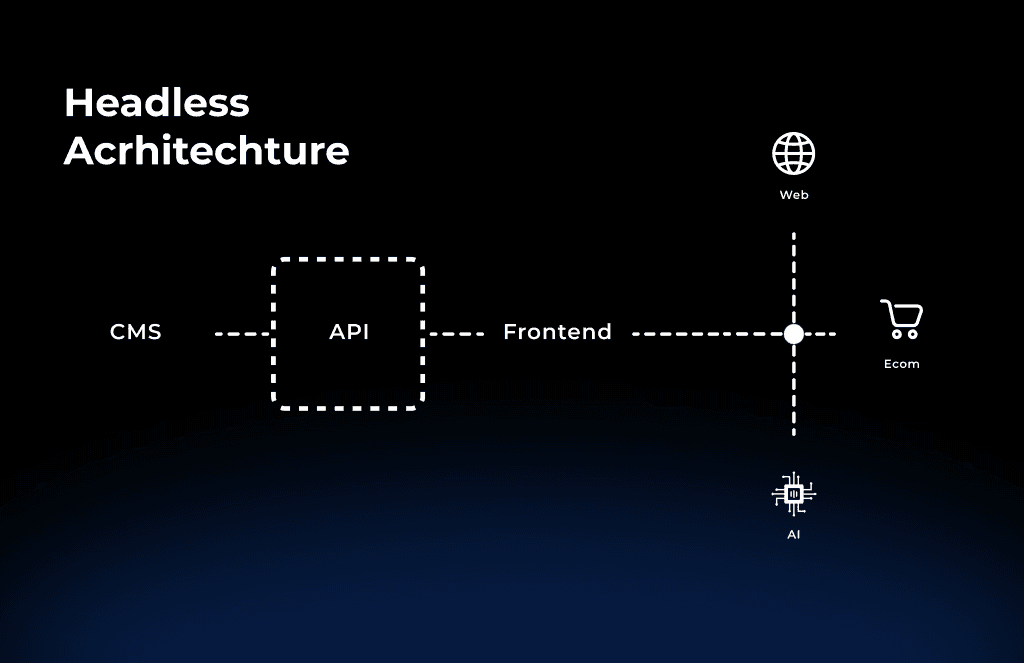
A headless website refers to a type of website architecture where the frontend (the “head”) is decoupled from the backend (the “body”). In traditional websites, the frontend and backend are tightly integrated, meaning the content and presentation layers are connected. However, with a headless setup, the backend (content management, data processing, etc.) operates independently of the frontend (the user-facing website or app). This separation allows for greater flexibility and adaptability across different platforms.
In practical terms, a headless website enables businesses to deliver content to any device or channel, whether it’s a website, mobile app, IoT device, or even a smartwatch, all from a single backend.
Key benefits of a Headless website
Improved Flexibility for Omnichannel Experiences
One of the primary reasons to choose a headless website is the flexibility it provides. With a headless architecture, content can be delivered to multiple touchpoints, including websites, mobile apps, digital kiosks, and more. By decoupling the frontend and backend, your business can create tailored user experiences across platforms without having to rebuild or modify the backend each time a new channel emerges.
Enhanced Performance and Speed
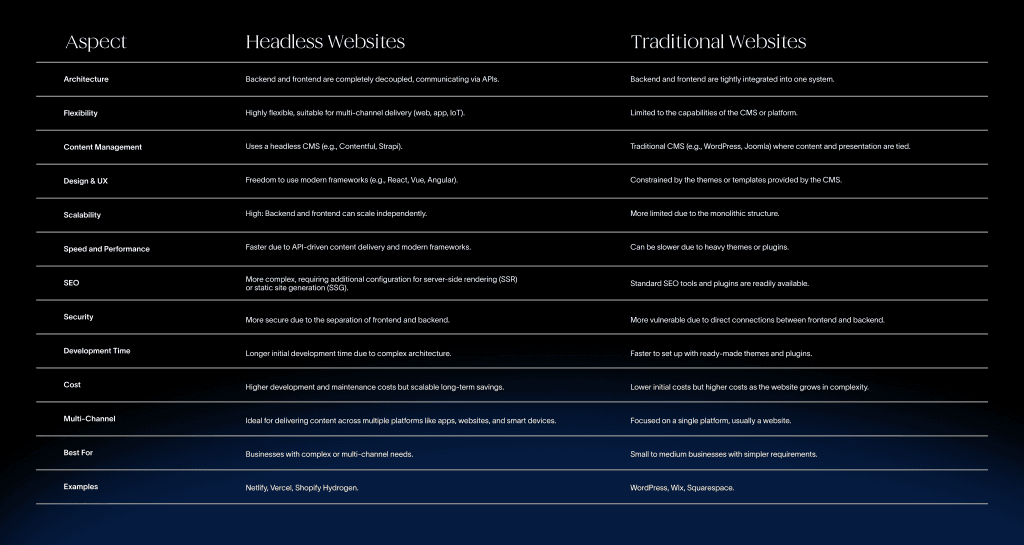
Speed is crucial when it comes to website performance. A headless setup allows for faster loading times by enabling the frontend to be optimized independently of the backend. By using technologies like static site generation and content delivery networks (CDNs), headless websites can serve content more quickly, improving the user experience and SEO performance. This is particularly beneficial for e-commerce websites, where fast page load times directly correlate to higher conversion rates.
Future-Proof and Scalable
The digital landscape is constantly evolving. Headless websites are future-proof because they provide the ability to adapt quickly to new technologies and digital trends. Whether you want to integrate with a new e-commerce platform, incorporate artificial intelligence, or connect with upcoming devices, a headless CMS ensures your website can scale as your business needs grow.
Customization and Personalization
Headless websites offer unparalleled customization and personalization options. Since the frontend is decoupled from the backend, developers can build custom user interfaces that cater specifically to your audience. Additionally, the backend allows for easier integration with third-party tools and APIs, enabling a more personalized experience for users, such as personalized product recommendations or tailored content.
Better Security
Security is often a concern for businesses with complex digital infrastructures. Headless websites can provide enhanced security by isolating the frontend and backend. Since the content management system is separate from the user-facing website, hackers have fewer entry points to exploit. Additionally, headless setups often allow for more secure and regular updates, ensuring your website remains protected.
Key considerations before adopting a headless website
While headless websites offer numerous advantages, there are a few considerations to keep in mind before adopting this architecture.
Technical Expertise Required
One of the challenges of implementing a headless website is the need for specialized technical skills. Since the frontend and backend are separate, the development process can be more complex than traditional websites. Your development team needs to be familiar with APIs, JavaScript frameworks, and content management systems that support headless architecture.
Initial Investment and Development Time
Building a headless website often requires more initial investment, as it demands custom development. The time and resources spent on creating a headless solution can be higher than traditional CMS platforms, especially for small businesses or those with limited technical resources. However, for businesses with long-term scalability goals, the return on investment (ROI) often justifies the cost.
Content Delivery and Management
While headless websites offer flexibility, managing content can be more complex. Traditional CMS platforms come with built-in themes and tools to simplify content management. In a headless environment, businesses need to use APIs to fetch and display content, which can be more complicated for content creators who are unfamiliar with technical systems. It’s crucial to weigh the impact on your content management workflow before opting for a headless setup.
How to determine if a Headless website is right for you
Not every business needs a headless website. However, if your business meets certain criteria, adopting this architecture could provide significant benefits.
You need to scale across multiple channels
If your business plans to expand to multiple platforms (e.g., mobile apps, smartwatches, IoT devices), a headless website will allow you to deliver consistent content across all touchpoints.
You’re looking for faster load times
For e-commerce businesses, speed is essential. Headless websites allow for optimized content delivery, which leads to faster page load times, improving user experience and SEO.
You require customization and flexibility
If your business needs a high degree of customization in terms of user experience and integrations with third-party tools, headless websites offer a flexible solution.
You want to future-proof your digital infrastructure
Headless architecture ensures that your website remains adaptable and scalable, allowing you to incorporate emerging technologies without needing to rebuild your platform.
Conclusion
Headless websites provide businesses with unparalleled flexibility, speed, and scalability, making them an excellent choice for those looking to stay ahead in the fast-paced digital world. While they require specialized technical expertise and a higher initial investment, the long-term benefits—such as enhanced performance, customization, and the ability to scale across multiple channels—often outweigh the costs. By adopting a headless architecture, businesses can create future-proof digital experiences that engage users, drive conversions, and set the foundation for sustained growth.
If your business runs on Shopify specifically, our headless Shopify guide breaks down what this architecture looks like in practice, costs included.
Ready to build something real together with your favorite creatives and tech leads? Get into contact or fill out an inquiry form.
Related articles


