Shopify Headless Commerce: Everything you need to know

By Robin Laseur

TL;DR: Shopify headless commerce separates Shopify’s backend from a custom-built frontend using frameworks like React or Next.js. It gives brands full creative control, faster performance, and enterprise-level scalability. As a Shopify Platinum Partner, Flatline helps brands design and deploy composable commerce ecosystems built for growth.
Definition: Shopify headless commerce is an architecture that separates Shopify’s backend from a custom-built frontend using modern frameworks like React or Next.js, allowing for complete design freedom, faster speed, and omnichannel flexibility.
Digital commerce has entered a phase where performance, personalization, and flexibility define success. Traditional Shopify themes, while reliable, often limit how far brands can push design and experience. That is where Shopify headless commerce or Shopify Plus headless comes in.
By decoupling Shopify’s backend from its storefront, teams can build custom experiences using frameworks like React, Next.js, and Hydrogen, hosted globally on Oxygen. This architecture gives brands the power to move faster, launch globally, and create storefronts that truly reflect their identity.
For developers, Shopify APIs open a world of integrations from CMS platforms like Storyblok to automation tools such as HubSpot and Klaviyo, while marketers gain the agility to experiment without compromising speed or stability.
In this guide, we explore what headless Shopify means in 2025, how composable commerce reshapes enterprise growth, and when going headless makes business sense.
What is Shopify Headless Commerce?
Shopify headless commerce is an eCommerce architecture that separates the backend, where Shopify handles products, checkout, and data, from a custom-built frontend. This allows brands to create fully tailored storefronts using modern frameworks such as React, Next.js, or Shopify Hydrogen, hosted seamlessly on Oxygen.
In a traditional Shopify setup, your storefront and backend logic are tightly linked. Customizing layouts or adding advanced features often means working within the limits of Liquid templates. Headless commerce removes that limitation. The frontend becomes independent, communicating with Shopify through Storefront and Admin APIs, giving developers complete creative control over design and performance.
This separation not only improves site speed and user experience but also opens the door to composable commerce, where your Shopify backend connects to best-in-class tools like Storyblok, Sanity, or Contentful for content, and HubSpot or Klaviyo for marketing automation.
For developers, headless Shopify means faster workflows, CI/CD deployment, and the freedom to integrate any service through APIs. For brands, it translates to higher scalability, omnichannel consistency, and a future-ready infrastructure.
Flatline Agency is an official Shopify Platinum Partner specializing in composable and headless architectures for enterprise brands, helping teams transition from traditional setups to flexible, API-driven ecosystems that scale globally.
To make headless builds more accessible, Shopify introduced two native technologies: Hydrogen and Oxygen.
Hydrogen is Shopify’s React-based framework for building headless storefronts. The latest Hydrogen release (v2025-07) integrates with React Router 7.9.2 and unifies server functionality under @shopify/hydrogen/oxygen, simplifying deployment workflows.
Oxygen is Shopify’s global hosting environment designed specifically for Hydrogen storefronts, ensuring fast load times and automatic scaling across regions, without relying on third-party servers.
Additionally, Shopify Headless allows for comprehensive analytics to inform marketing strategies.
Beyond architecture, Shopify has rolled out several backend changes that impact headless developers:
As of API version 2025-01, tax and duty fields are no longer returned in the cart object within the Storefront API. Tax calculation now occurs directly at checkout for better accuracy.
Shopify continues to deprecate the REST API to fully transition to GraphQL. Public apps were required to migrate by February 1, 2025, with private and custom apps following shortly after.
Some developers have reported inconsistencies in updatedAt timestamps between the Storefront and Admin APIs, a reminder that version control and API monitoring remain critical in headless environments.
With these evolutions, Shopify Headless Commerce in 2025 is no longer just about separating frontend from backend. It represents a more flexible, developer-first ecosystem that aligns with modern frameworks, performance standards, and the future of composable commerce.
Why traditional Shopify setups reach their limits
Shopify’s traditional architecture is built for simplicity, a connected system where design, content, and backend logic all live under one theme. For startups or small brands, this works perfectly. But as businesses scale, creative ambition and technical demands start to push against the platform’s native limits.
1. Limited design flexibility
Liquid themes are easy to edit but difficult to scale. The more you customize them, the slower and more fragile they become. Complex visuals, dynamic animations, or custom UX flows often require developer workarounds, increasing technical debt.
Headless Shopify setups allow your design team to move freely using React or Next.js, while Shopify continues to manage checkout, inventory, and backend logic.
2. Performance bottlenecks
A growing store means more content, plugins, and scripts, each one adding milliseconds to your load time. According to Google, every 100ms delay can reduce conversion rates by up to 7%.
Headless architectures offload this pressure by serving static pages through Hydrogen and Oxygen, delivering enterprise-grade Shopify performance globally.
3. Fragmented omnichannel experience
Consumers interact with brands across devices, platforms, and even physical touchpoints. Traditional Shopify themes are optimized for web, not for a connected omnichannel strategy.
By going headless, you can reuse Shopify’s backend across all frontends, apps, marketplaces, kiosks, ensuring unified data, consistent UX, and faster global rollout.
4. Slower innovation cycles
Because the frontend and backend are coupled, even small design changes can trigger long deployment processes. Developers must work around the same codebase as marketers, slowing down experimentation and releases.
In a headless Shopify store setup, teams work in parallel: marketers update content while developers refine UX, no conflicts, no downtime.
Key takeaway:
Traditional Shopify is efficient for launch. Headless Shopify is built for growth. As your brand scales across products, regions, and digital touchpoints, decoupling the frontend becomes not just a technical upgrade, but a strategic decision to future-proof your business.
Key benefits of Shopify headless commerce
Headless commerce is more than a technical upgrade, it is an evolution in how brands design, build, and scale digital experiences. Below are the key reasons why enterprise teams are moving toward Shopify Plus headless architectures in 2025.
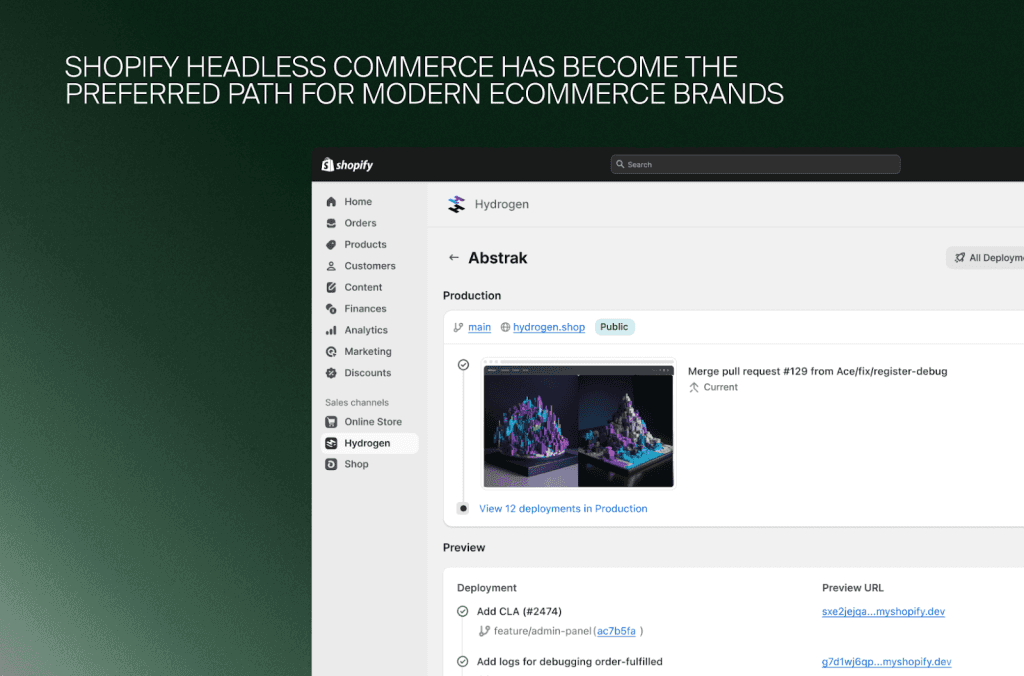
1. Full design freedom
Traditional Shopify themes limit what can be done visually. Headless removes those barriers. Developers can build custom storefronts using React, Next.js, or Shopify Hydrogen, integrating motion, personalization, and modern UI libraries without Liquid restrictions. Designers can create layouts that match the brand identity perfectly, while developers optimize for performance and SEO.
Key takeaway:
Headless unlocks complete creative freedom, enabling your team to design experiences that go beyond Shopify’s default theme capabilities.
2. API-driven performance and speed
Headless storefronts are powered by Shopify’s GraphQL Storefront API, which allows data to flow directly between backend and frontend without heavy themes or unnecessary code. When hosted on Oxygen, these storefronts achieve sub-second load times, edge caching, and global scalability, ideal for high-traffic or international stores.
Key takeaway:
By separating the presentation layer, Shopify headless storefronts deliver enterprise-grade performance and faster conversion-driven experiences.
3. Omnichannel consistency
In an era where customers switch between mobile, web, and in-store touchpoints, omnichannel Shopify experiences are key. A single Shopify backend can now power multiple frontends, apps, microsites, or even IoT interfaces, all connected via APIs. This structure keeps your catalog, content, and checkout perfectly synchronized, no matter where users interact.
Key takeaway:
Headless ensures brand consistency and data accuracy across every digital and physical channel.
4. Developer agility and flexibility
Headless Shopify development aligns with modern workflows, from CI/CD pipelines to modular components. Teams can deploy updates faster, integrate external APIs, and experiment without disrupting the live environment. It gives developers the autonomy to innovate and marketers the stability to scale confidently.
Key takeaway:
Agile development becomes possible when your frontend and backend evolve independently, driving both innovation and reliability.
5. Scalability for enterprise growth
As businesses expand globally, manage multiple currencies, and handle complex inventories, scalability becomes critical. Shopify Plus paired with headless architecture delivers enterprise Shopify scalability, supporting large product catalogs and traffic spikes without compromising stability. It also allows teams to add new markets, languages, or customer experiences without re-platforming.
Key takeaway:
Headless Shopify provides a long-term foundation for growth, a composable system that scales alongside your brand.
Challenges and considerations
While Shopify headless commerce unlocks performance, flexibility, and scalability, it is not a one-size-fits-all solution. The same independence that empowers large enterprises can introduce technical complexity and higher operational costs for smaller teams.
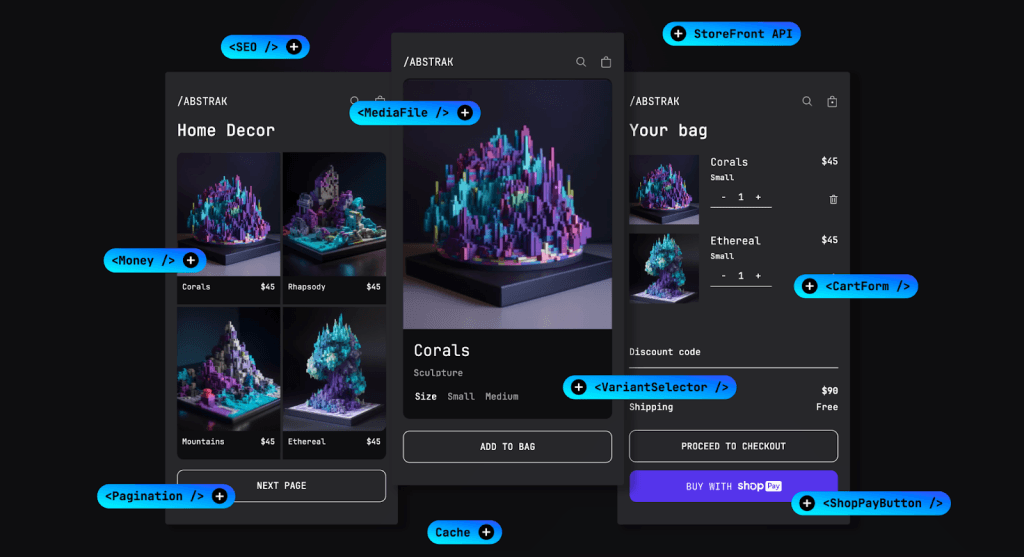
1. Development complexity
Headless setups require developers who understand API integrations, React or Next.js frameworks, and continuous deployment workflows. Managing two environments, Shopify’s backend and a custom frontend, demands stronger coordination between teams.
Without proper versioning and code governance, updates can quickly become misaligned. That is why most enterprise headless Shopify builds involve cross-functional teams or a trusted development partner.
2. Higher setup and maintenance costs
Compared to a traditional Shopify theme, a headless Shopify store setup involves a larger upfront investment. You are not just designing a storefront, you are building a composable system with hosting, deployment, and API management.
However, this cost is offset over time by higher conversion rates, faster iterations, and better long-term scalability.
3. API dependency and version management
Shopify headless architectures rely on APIs to connect data across platforms. When Shopify releases new API versions (like the 2025-10 Storefront API), deprecated fields can impact functionality if not monitored closely.
This requires active version management and API observability to ensure your API-driven eCommerce stays stable and secure.
4. Security and performance oversight
A decoupled architecture increases the number of integration points, each one needs its own security layer. Developers must implement authentication, caching, and error handling at every touchpoint to maintain consistency.
With enterprise-level observability tools, teams can identify performance issues faster and maintain reliability across regions.
5. Organizational readiness
Headless transformation is not just technical, it requires cultural alignment. Marketing, design, and development teams must collaborate in an agile framework where content and code evolve in parallel.
Brands that succeed in this transition are the ones that treat Composable commerce Shopify as a long-term investment, not a quick fix.
Pro tip: A trusted Shopify Platinum Partner like Flatline can help brands navigate the headless journey from strategy to scale, ensuring consistency, measurable ROI, and smooth collaboration between creative and technical teams.
How Flatline builds headless Shopify experiences
As a Shopify Platinum Partner, Flatline Agency helps enterprise brands transition from traditional Shopify setups to fully composable architectures designed for scalability, speed, and creative freedom.
Our process blends design precision with technical depth, ensuring every headless build is optimized for both experience and performance.
1. Designing with Hydrogen and Oxygen
We build custom Hydrogen storefronts hosted on Oxygen, giving brands global speed, stable infrastructure, and front-end control that goes far beyond Liquid themes. By combining React-based components with Shopify’s APIs, our developers craft storefronts that are dynamic, secure, and fast from the very first render.
2. Integrating composable tools
Headless success depends on seamless integrations. Flatline connects Shopify backends with composable tools like Storyblok, HubSpot, Klaviyo, and Contentful, creating a unified data and content ecosystem. This approach gives marketing and design teams the flexibility to update campaigns, pages, and assets without developer dependency.
3. Real-world implementations
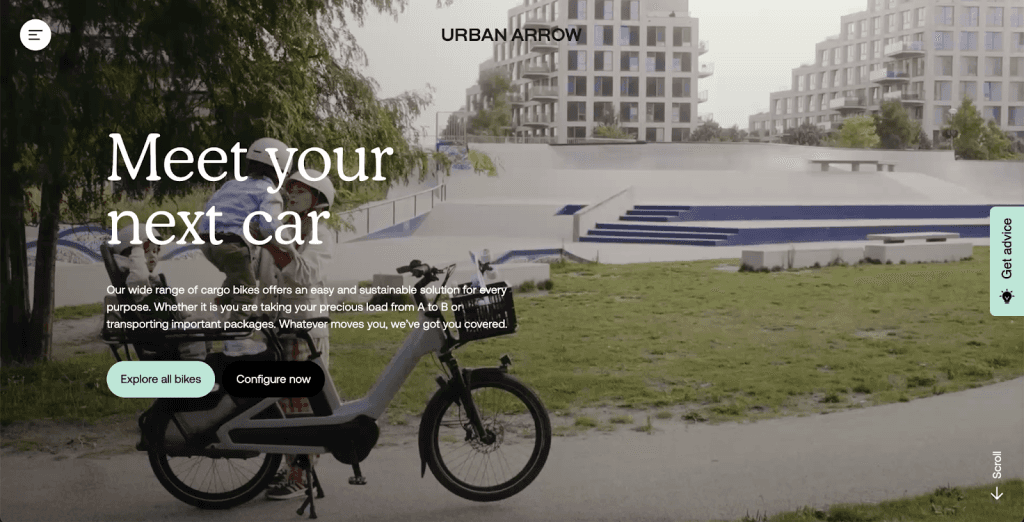
Urban Arrow: Flatline developed a headless Shopify Plus setup powered by Storyblok, enabling full design flexibility and omnichannel scalability while maintaining Shopify’s backend reliability.
Stoov: Through an optimized Shopify Markets structure, Stoov consolidated regional stores into one ecosystem, improving performance, streamlining localization, and increasing conversions across Europe.
These examples illustrate how enterprise Shopify scalability meets creative freedom when headless architecture is done right.
4. Continuous optimization
Headless builds are not static. We help brands refine their architecture over time, monitoring API performance, updating frameworks, and integrating emerging Shopify technologies like Hydrogen 3.0 and Shopify Functions. This ensures every storefront evolves as fast as the brand behind it.
Key takeaway: A successful headless Shopify implementation is not just about technology, it is about strategy, collaboration, and execution. Flatline’s role is to bridge all three, building experiences that perform, scale, and inspire.
Is Shopify headless commerce right for your brand?
Not every business needs a headless setup, but for brands that have outgrown the limits of traditional Shopify, it can be a turning point. The question is not whether you can go headless, but whether your current infrastructure is holding back your growth.
1. You have outgrown traditional Shopify themes
If your creative or UX teams constantly face design limitations, slow updates, or plugin conflicts, your store may have reached its ceiling. Headless Shopify removes these constraints, giving teams full control over design, layout, and performance.
When your creative vision starts clashing with what Liquid templates can support, headless becomes less of an experiment and more of a necessity.
2. You are scaling across multiple markets or touchpoints
Global brands often need one backend powering multiple localized storefronts, apps, or microsites. A headless setup makes this possible. You can manage all your content, pricing, and inventory from a single Shopify Plus backend while deploying different frontends for each market, all connected via the Storefront API.
3. Performance directly impacts your revenue
When page load time becomes a KPI, going headless is a performance investment. Shopify’s native Oxygen hosting and Hydrogen framework enable sub-second storefronts globally, improving SEO rankings and conversion rates.
Brands like Urban Arrow use headless Shopify architecture to deliver dynamic, API-powered experiences that scale internationally while maintaining lightning-fast load speeds.
4. You have technical resources or a strategic digital partner
A headless architecture requires ongoing development and API management. Brands with in-house engineers or those partnered with an experienced agency will benefit most.
As a Shopify Platinum Partner, Flatline Agency helps enterprise brands plan, build, and scale composable storefronts that merge creative freedom with technical reliability. From Hydrogen migrations to API integrations and localization, we guide teams from strategy to launch.
5. You are preparing for long-term scalability
If your roadmap includes multi-language stores, international expansion, or personalized shopping journeys, a headless architecture ensures your store can evolve without re-platforming. It future-proofs your technology stack for innovation and growth.
When headless might not be the right choice
Headless commerce is powerful, but not necessary for every business. Smaller or early-stage brands that rely on Shopify’s built-in editor and app ecosystem may not yet see enough ROI to offset the added complexity.
If your priority is speed-to-market and ease of maintenance, Shopify’s native Online Store 2.0 provides strong performance without the overhead of a custom frontend. The goal is not to adopt new technology for its own sake, but to ensure your commerce stack aligns with your growth ambitions.
For a closer, cost-inclusive breakdown of when headless is worth it, see our complete headless Shopify guide.
The future of Shopify headless commerce
Headless commerce is no longer an emerging trend, it is the architecture shaping how brands build digital ecosystems. In 2025 and beyond, Shopify continues to evolve its stack around three main forces: composability, performance, and intelligence.
1. Composability becomes the standard
As digital teams move away from monolithic systems, Composable commerce Shopify has become the default for enterprise setups. Instead of relying on one rigid platform, brands now connect multiple best-in-class tools through Shopify APIs. Hydrogen, Oxygen, and Storefront API work together to create modular ecosystems that are both flexible and future-proof.
Key takeaway: Composable commerce allows brands to adapt fast, integrating new tools or touchpoints without overhauling their entire tech stack.
2. AI-driven personalization and automation
Shopify’s 2025 roadmap emphasizes AI at the core of its ecosystem. With Shopify Sidekick and Shopify Magic, merchants can now generate content, personalize recommendations, and optimize UX through data-driven automation. When combined with a headless architecture, these AI tools plug directly into your storefront via APIs, making it possible to deliver personalized experiences at scale across devices and markets.
Key takeaway: AI and headless architectures are converging, creating adaptive storefronts that learn and respond in real time.
3. Hydrogen 3.0 and serverless storefronts
The upcoming Hydrogen 3.0 release focuses on speed, modularity, and serverless performance. Running on Oxygen, these storefronts are optimized for global edge delivery, ensuring sub-second page loads even during traffic spikes. This shift from static builds to serverless rendering empowers developers to iterate faster while maintaining enterprise-grade security and uptime.
Key takeaway: Hydrogen and Oxygen are redefining Shopify headless performance, making speed, security, and scalability the new creative baseline.
4. A shift toward adaptive commerce
The next phase of headless is adaptive storefronts that adjust content, pricing, and layout automatically based on context and user behavior. By combining composable APIs, AI data models, and real-time analytics, Shopify is moving toward a future where storefronts evolve dynamically with each visitor.
Key takeaway: The future of Shopify headless commerce is not just faster, it is smarter. The goal is to build commerce systems that anticipate user needs before they even click.
Conclusion: the future of Shopify headless commerce
Shopify headless commerce has become the blueprint for modern digital growth. It bridges design freedom with performance, enabling brands to move faster, scale globally, and adapt in real time.
By separating the storefront from the backend, teams gain control over every layer of experience, from how products are displayed to how data flows between systems. Hydrogen and Oxygen make this architecture tangible, while Shopify’s investment in AI and composable APIs continues to push what’s possible.
This evolution marks more than a shift in technology. It is a shift in mindset, from maintaining a store to building a living, adaptive ecosystem.
So, what could your Shopify experience achieve if nothing held it back? Challenge us.
Related articles


F.A.Q.

What does headless Shopify mean?
Headless Shopify means Shopify runs the backend, including products, inventory, checkout and data, while the storefront customers see is a separate, custom-built frontend. The two communicate through Shopify's Storefront and Admin APIs. Because the frontend is no longer tied to Liquid themes, teams can build it with React, Next.js or Shopify's own Hydrogen framework.
What are Shopify Hydrogen and Oxygen?
They are Shopify's own tools for headless storefronts. Hydrogen is a React-based framework with ready-made building blocks for product pages, carts and other storefront features, connected directly to Shopify's backend. Oxygen is Shopify's global hosting platform for Hydrogen storefronts, rendering pages close to the visitor for fast load times. You can also go headless without them, for example with Next.js.
Does a headless Shopify store still use Shopify checkout?
Yes. In a headless setup the custom frontend handles browsing and the cart, and customers complete their purchase in Shopify's own checkout. That keeps payments, taxes, security and compliance with Shopify, while you control everything before the checkout. It also means checkout customization follows the same Checkout Extensibility rules as a regular Shopify store.
When is headless Shopify worth it?
Headless pays off once your theme is holding back growth: design ideas that Liquid cannot support, page speed that directly affects revenue, or several markets, apps and touchpoints running on one backend. It does require developers or an experienced Shopify agency, such as Flatline, for ongoing maintenance. For smaller stores focused on speed-to-market, a standard Online Store 2.0 theme is often the better choice.
What are the downsides of headless Shopify development?
Higher build and maintenance costs, and more complexity. You maintain a separate frontend alongside Shopify, which requires developers who know React, GraphQL and API integrations. Not every Shopify app works with a headless frontend without custom work, content editing is harder without the theme editor unless you add a CMS, and new API versions need active monitoring to prevent breaking changes.