Shopify and ERP / PIM connections: The ultimate guide

By Robin Laseur

Hey there Flatline Fam! Today, we’re diving into the world of Shopify and its connections with ERP and PIM systems.
Whether you’re a seasoned pro or just starting out, this guide is packed with insights to help you navigate these integrations like a boss. Sooo let’s get started!
PIM and ERP: What are they?
PIM – Product Information Management
PIM, or Product Information Management, is your go-to for managing all product-related info. It’s like the brain of your product data, handling everything from specs and lifecycle info to digital assets. PIM ensures your product info is accurate, consistent, and ready to rock across all customer touchpoints.
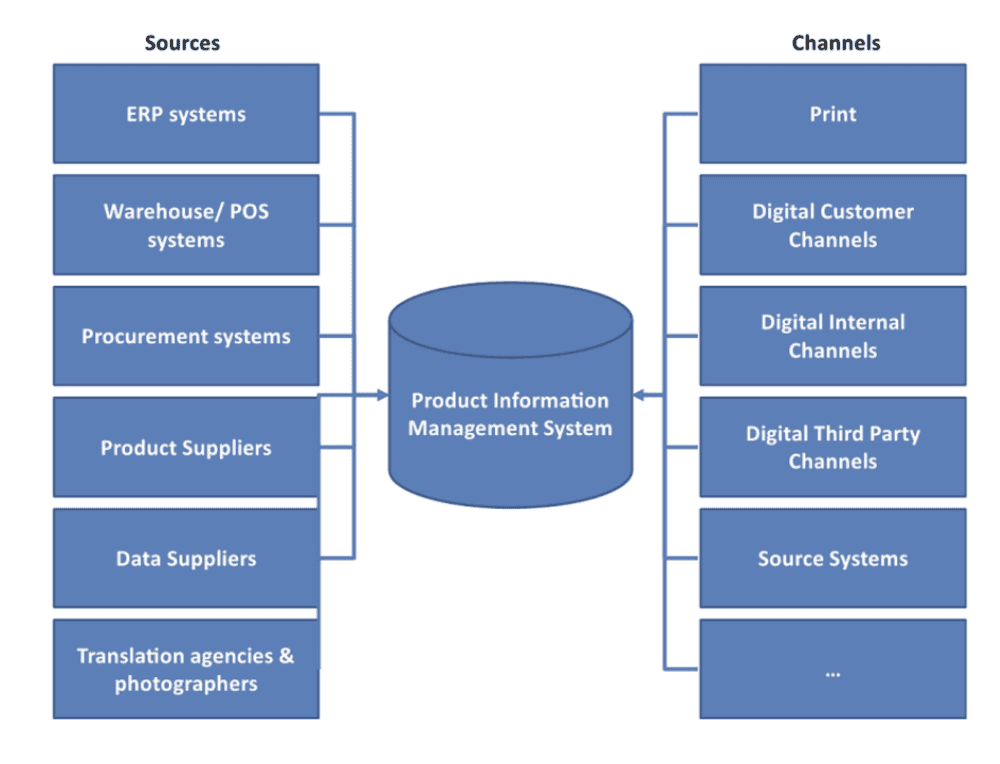
“Product Information Management: Theory and Practice” by Abraham Jorji
ERP – Enterprise Resource Planning
ERP, or Enterprise Resource Planning, is the software managing your day-to-day business processes. Think of it as the central nervous system of your business, handling everything from HR and accounting to supply chain operations. It’s all about streamlining data flow and keeping your business operations smooth and efficient. So an ERP-Systems stores data in the kind of finance, human resources, warehouse, logistics, inventory, customer relationships, sales …
Features: PIM vs. ERP
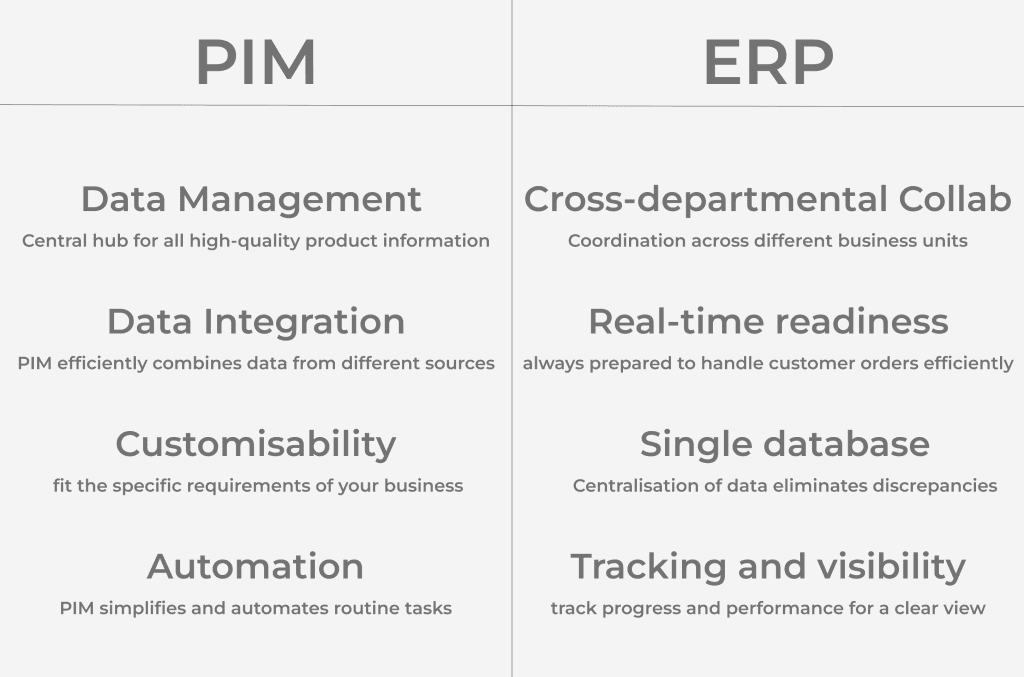
By integrating PIM and ERP features, eCommerce businesses can achieve more streamlined operations, better data management, and improved customer satisfaction. Here are some of the most important features of both integrations:
PIM Integrations for Shopify
1. Akeneo
A powerhouse in PIM, Akeneo makes managing product information a breeze. It’s perfect for businesses looking to streamline their product data across various channels.
2. Salsify
This integration is a game-changer for those who want to enrich their product content. Salsify brings a blend of PIM and DAM (Digital Asset Management) to the table, ensuring your product info is both comprehensive and engaging.
3. Pimcore
Ideal for businesses seeking a flexible and open-source PIM solution. Pimcore not only manages product data but also offers digital experience management capabilities.
4. Sales Layer
A cloud-based PIM solution that simplifies product information management. Sales Layer is known for its user-friendly interface and quick integration with Shopify.
6 Tips for scaling with Shopify PIM
ERP Integrations for Shopify
1. NetSuite ERP
A popular choice for Shopify integration, NetSuite offers a comprehensive suite of business applications. It’s great for real-time visibility and control over your operations.
2. SAP Business One
Known for its robustness, SAP Business One is a go-to for businesses needing a powerful ERP solution. It seamlessly integrates with Shopify, ensuring efficient order processing and inventory management.
3. Microsoft Dynamics 365
This cloud-based solution offers modular tools for various business functions. Its integration with Shopify enhances CRM capabilities and provides data-driven insights.
4. Brightpearl
Tailored for small and medium-sized retailers, Brightpearl offers a cloud-based ERP solution that integrates seamlessly with Shopify. It excels in real-time inventory management and comprehensive business operations.
How they work together
How PIM and ERP systems collaborate when integrated with Shopify
PIM and ERP systems come together like a perfectly choreographed dance, each playing a distinct yet interconnected role. Picture PIM as the master storyteller, weaving rich narratives around your products. It manages all the intricate details – from captivating descriptions to eye-catching images – ensuring that your product information is not just accurate but also engaging and consistent across all your sales channels. This is where the magic of PIM shines, making every product detail a part of a compelling story that resonates with your customers.
ERP operates as the organisational powerhouse working behind the scenes. It takes the baton from PIM, handling the operational heavy lifting – managing inventory, processing orders, overseeing customer data, and keeping the financial wheels turning.
As orders flow in from your Shopify store, ERP springs into action, ensuring that the logistical side of things runs like clockwork. It’s the system that makes sure that the promises made by PIM are deliverable, keeping track of inventory levels, coordinating with suppliers, and managing shipping and fullfillment.
The beauty of their collaboration lies in their seamless data exchange.
ERP feeds PIM with the latest operational data, like inventory levels and pricing, which PIM uses to update product information across various platforms. This synergy ensures that what your customers see on your Shopify store is always in sync with what’s happening in the warehouse.
When new products are launched, PIM and ERP work in tandem – PIM handles the presentation aspect, while ERP takes care of stocking and availability. This collaboration extends beyond just keeping the data in sync; it enhances the overall customer experience. With PIM ensuring accurate and detailed product information and ERP managing efficient order processing, customers enjoy a smooth and hassle-free shopping journey. This not only boosts customer satisfaction but also builds loyalty and trust in your brand.
Practical uses in eCommerce
Multi-Channel selling: Easily manage and sell products across different platforms while maintaining consistency and operational efficiency.
Scalability: As your business grows, PIM and ERP scale with you, handling increased data and more complex operations without missing a beat.
Data-Driven decisions: The combined data from PIM and ERP provides valuable insights for strategic decisions – from inventory management to marketing strategies.
Global expansion: Quickly adapt to new markets with PIM’s ability to manage product information in multiple languages and ERP’s operational data handling.
Improved SEO: PIM helps optimise product descriptions and metadata for better search engine rankings, driving more traffic to your Shopify store.
To sum up
In essence, the collaboration between PIM and ERP when integrated with Shopify is a harmonious blend of storytelling and operational excellence. It’s a partnership that not only makes managing an eCommerce business more efficient but also elevates the customer experience to new heights. In the end it’s all about making your operations more efficient, your product information more compelling, and ultimately driving your business towards greater success. So, gear up and get ready to take your Shopify store to the next level with these powerful integrations!
We at Flatline Agency, official Shopify Plus Partners, are here to help you take your business to the next step, including custom development, design, and marketing. As a full-service ecommerce agency, we scope these ERP and PIM integrations as part of a broader Shopify Plus build, not a bolt-on afterthought. If you are interested, please feel free to contact us.
Related articles


