Building a low TCO eCommerce platform for Lions Fashion Group

By Robin Laseur

Lions Fashion Group (LFG) operates multiple fashion brands, each with its own identity, audience, and growth ambition. Scaling those brands independently would increase development cost, operational overhead, and long-term maintenance.
Flatline Agency partnered with Lions Fashion Group to design a low TCO eCommerce infrastructure built on Shopify Plus. Instead of creating separate platforms for Malelions, CROYEZ, and Duquezzi, we developed a shared, scalable foundation with one starter theme, a unified codebase, and brand-specific configurations.
The result: one shared Shopify Plus foundation powering multiple brands, delivering consistent conversion performance and long-term cost efficiency.
In this case study, we break down how the architecture was designed, which tools were used, and why this system supports profitable growth without increasing complexity.
Understanding the challenge: Scaling multiple brands
Lions Fashion Group operates multiple fashion brands, each with its own identity, audience, and growth strategy. While this brand autonomy is essential, scaling each store independently would have introduced structural inefficiencies over time.
Building and maintaining separate eCommerce platforms for every brand would have led to predictable problems:
Duplicated development work
Fragmented systems and tooling
Rising maintenance and operational cost
Slower releases over time
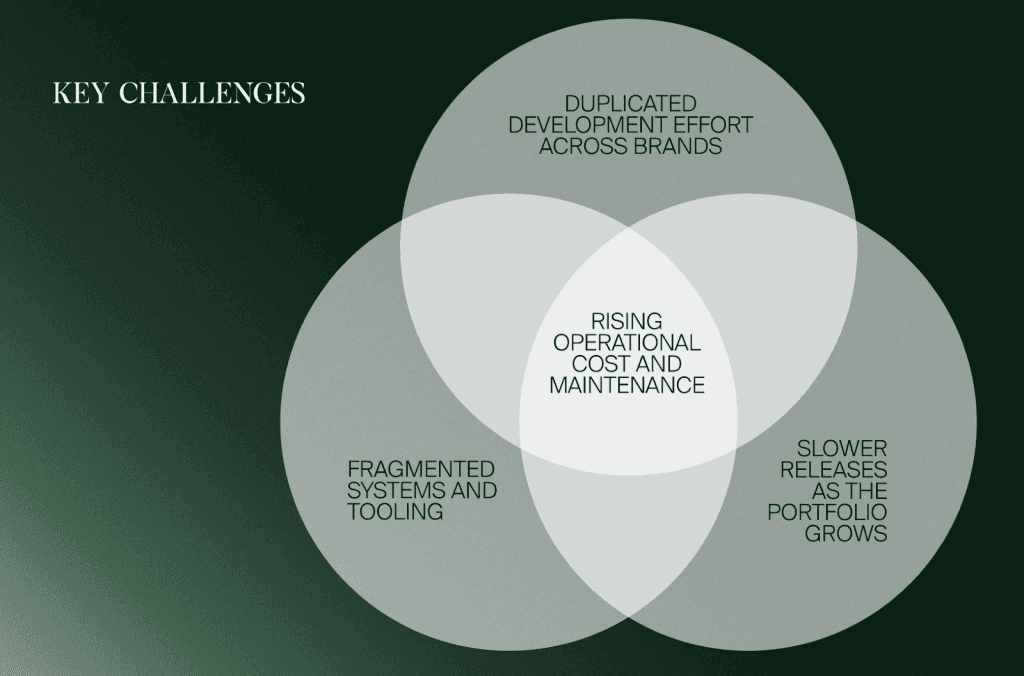
The challenge was not growth itself, but how to scale without increasing complexity.
Treating every store as a standalone project would have slowed iteration, increased technical debt, and made long-term maintenance harder to control. Flexibility at the brand level was required, but the underlying platform needed to remain stable, predictable, and easy to maintain.
A systems-level problem
Flatline reframed this as a systems challenge, not a store-by-store build. The goal was to design a shared foundation that could support multiple brands while keeping total cost of ownership predictable.
By avoiding overengineering and focusing on reuse from the start, the platform could scale without fragmenting tooling or multiplying operational effort. This approach reflects how Flatline designs scalable eCommerce platforms for brands that need to grow without accumulating technical debt.
Our approach: Building once, scaling across brands
Flatline approached the build with one guiding principle: centralise what should be shared and configure what needs to be unique. Instead of developing three separate webshops, the team designed a single foundation that could scale across brands without repeating work.

Core components and workflows were shared by default. Brand-specific differences were handled through configuration, not custom development. This allowed Malelions, CROYEZ, and Duquezzi to operate independently at the front end, while relying on the same underlying system.
In practice, this meant:
One shared codebase for core functionality
Reusable components applied across brands
Brand-specific customisation handled at configuration level
No duplicated development per store
Because the system is built once and reused, improvements to UX, performance, or conversion-focused elements can be deployed across all brands at the same time. New launches build on an existing foundation instead of starting from scratch.
This system-driven way of working is central to how Flatline approaches scalable eCommerce development. It keeps releases predictable, maintenance centralised, and growth manageable as the portfolio expands.
Designing for conversion at scale
Low TCO eCommerce only works if performance scales alongside efficiency. For Lions Fashion Group, conversion was treated as a structural decision, not a post-launch optimisation.
From the start, Flatline designed the platform around consistent UX patterns and performance-first templates. Instead of optimising each store in isolation, conversion-critical elements were shared across brands. This made it possible to apply learnings once and reuse them everywhere.
Structural conversion principles
Shared UX patterns across storefronts
Clear information hierarchy on product and category pages
Consistent calls-to-action
Performance-first templates across devices
This approach enabled the group to work towards a consistent 4%+ conversion rate across brands. Improvements were measured on impact rather than preference, ensuring that optimisation efforts contributed directly to revenue without increasing operational effort.
Flatline’s approach to conversion is closely tied to its conversion rate optimization practice, where CRO is embedded into the platform rather than treated as a series of experiments.
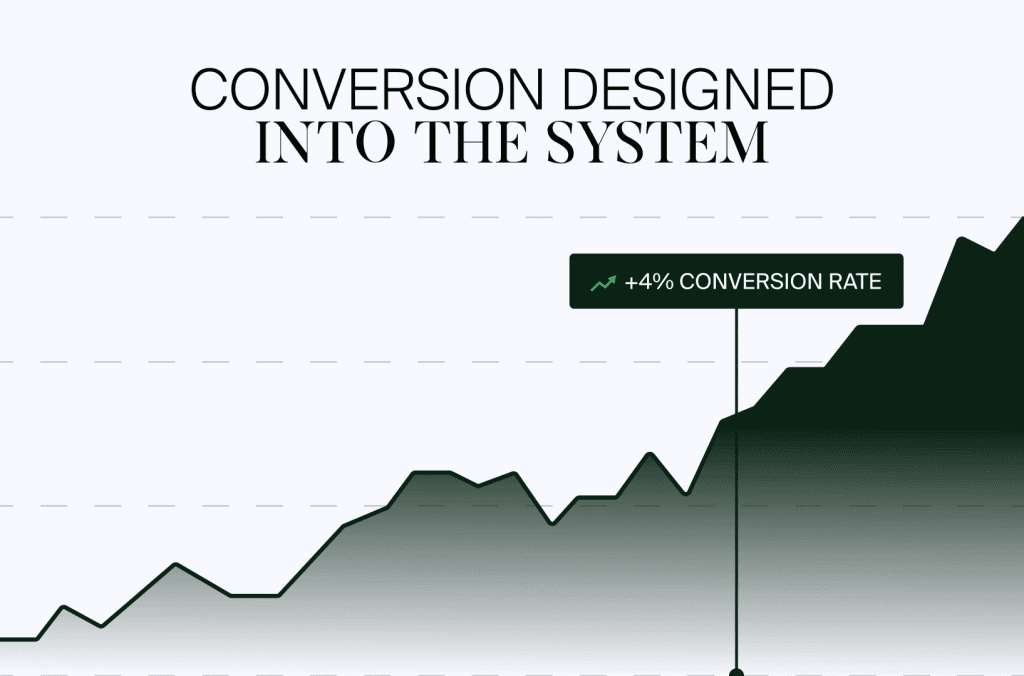
The result is conversion performance that compounds over time. As traffic grows, the system continues to convert efficiently without requiring additional tooling or manual optimisation per brand.
The technical architecture behind a low TCO eCommerce setup
When Lions Fashion Group decided to scale multiple fashion brands, building separate systems per store was not an option. The platform needed to scale without increasing maintenance effort.
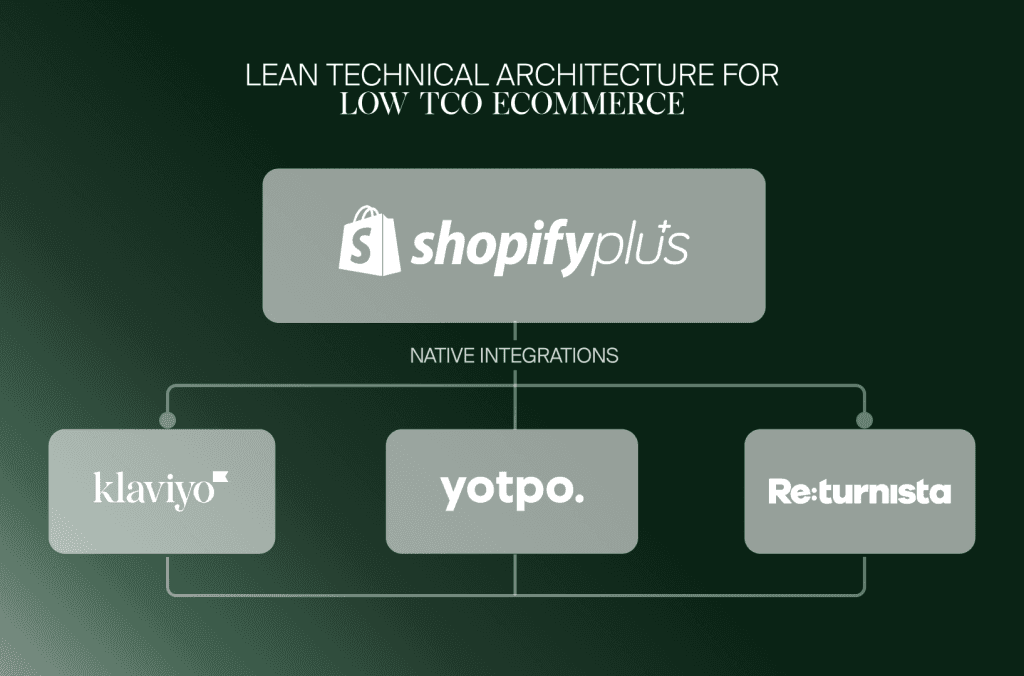
Flatline designed the setup as one shared system on Shopify Plus, using a single starter theme and configuration-driven architecture. Malelions and CROYEZ run on the same core theme, while Duquezz i follows the same logic through a template-based setup.
Each brand maintains its own identity, while conversion-critical components are built once and reused across the group.
This structure makes scaling predictable:
UX and conversion improvements apply across all brands
New features launch faster without duplicated work
Maintenance stays centralised instead of fragmented
On top of Shopify, Flatline integrated a lean, native tool stack:
Klaviyo for email and SMS automation, connected directly to customer and order data
Yotpo for reviews and social proof, supporting trust and conversion across storefronts
Returnista for returns management, reducing operational overhead
Each tool connects directly to Shopify, without custom middleware, keeping the setup lean and easy to evolve.
Because all brands share the same foundation, analytics and performance tracking are consistent by default. Data, CRO insights, and marketing learnings can be reused across brands instead of starting from zero each time.
The result is a platform that scales without friction. By clearly separating shared systems from brand-specific layers, Lions Fashion Group can grow while keeping operations predictable.
In this video, Flatline explains how low TCO architecture, conversion-first design, and shared systems come together to support long-term, profitable growth across multiple brands.
Results that compound over time
The impact of the shared architecture became visible quickly. Instead of managing three separate platforms, Lions Fashion Group now operates multiple brands on a single, scalable foundation.
Key outcomes:
Consistent 4%+ conversion rates across brands
Faster releases without additional development overhead
One central system instead of fragmented tooling
Easier onboarding of new brands and collections
Because improvements are applied at system level, results compound over time. As traffic and brand portfolios grow, performance and efficiency scale together, without increasing complexity or operational cost.
Building scalable fashion eCommerce with low TCO
Scaling a fashion portfolio does not require more platforms or custom tooling. It requires a low TCO eCommerce architecture designed for reuse, performance, and operational clarity.
This case study shows how a shared Shopify Plus foundation enabled Lions Fashion Group to scale multiple brands without duplicating development effort or increasing technical overhead. By centralising core systems and keeping brand differentiation configurable, the platform remains predictable as complexity grows.
If you are managing multiple fashion brands or preparing for international expansion, Flatline designs scalable Shopify Plus eCommerce platforms built for long-term efficiency, conversion, and growth.
Talk to Flatline about building a low TCO eCommerce setup that scales with your brand portfolio.
Related articles


