Top website design trends to boost user experience in 2026

By Robin Laseur

Website design is more than just appearance; it’s about creating experiences that captivate users and keep them engaged. As technology evolves, users demand websites that are not only functional but also immersive, personalized, and fast. In 2026, staying ahead of these expectations is a competitive necessity for businesses of all sizes.
For businesses, understanding and applying the latest website design trends isn’t just about aesthetics: It’s about improving user experience (UX) and staying relevant in a digital-first world. A website that leverages cutting-edge trends will drive engagement, increase conversions, and foster long-term loyalty.
In this blog, we’ll explore the top design trends shaping 2026 and dive into how you can integrate these strategies into your website. We’ll provide actionable tips, detailed explanations, and insights into why each trend is key to boosting UX.
The importance of user experience in modern web design
Why boosting user experience is crucial for website success
User experience (UX) refers to how users interact with and feel about your website. It’s more than just usability; it’s about creating an emotional connection and delivering value at every step of the user journey.
Here’s why UX is critical in 2026:
Increased competition: With so many websites available, users will quickly leave a site that doesn’t meet their expectations.
Stronger brand connections: Good UX fosters trust and brand loyalty, encouraging repeat visits and long-term engagement.
Higher SEO rankings: Search engines prioritize websites with high engagement and low bounce rates, both of which result from superior UX.
The relationship between website design trends and UX
The latest design trends emerge as a response to evolving user needs and technological advancements. They push the boundaries of what’s possible, making websites faster, more engaging, and easier to use. For example, micro-interactions, small animations or responses triggered by user actions add personality to websites and improve navigation, directly enhancing UX.
By integrating these trends into your design, you ensure your website not only keeps up with user expectations but exceeds them.
Top website design trends to boost user experience in 2026
1. immersive experiences with 3D visuals and augmented reality (AR)
Immersive design is redefining how users interact with websites, creating experiences that go beyond traditional flat interfaces. 3D visuals and augmented reality (AR) are at the forefront of this trend, offering interactive and memorable engagements.
Applications of 3D and AR
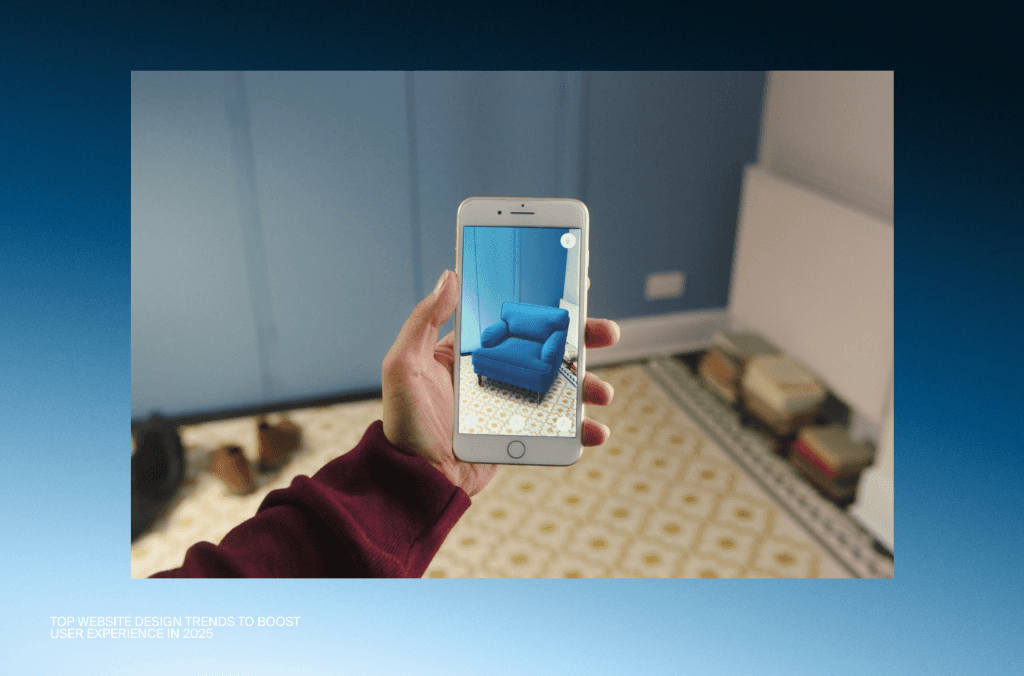
E-commerce: AR allows users to see how products, like furniture or clothing, look in real life before purchasing. For example, IKEA uses AR to let users visualize furniture in their homes.
Creative portfolios: Artists and designers can showcase their work in dynamic 3D galleries, creating an experience that feels personal and innovative.
How it boosts UX
Immersive design keeps users engaged by making interactions more interactive and enjoyable. It also simplifies decision-making, as users can better visualize products or services
2. personalized content powered by AI
In 2026, AI-driven personalization is a non-negotiable part of website design. Users expect content that feels tailored to their preferences, and AI makes this possible by analyzing data in real time.
Practical examples of AI-driven personalization
Dynamic recommendations: Platforms like Netflix and Spotify use AI to suggest shows or songs based on user behavior, a model that can be applied to blogs or e-commerce sites.
Adaptive user interfaces: AI adjusts page layouts, colors, or navigation menus based on user preferences or past interactions.
Why it matters for UX
Personalized content reduces friction, making it easier for users to find what they need. This leads to higher satisfaction and engagement rates, as users feel the website is designed with them in mind.
3. minimalism with interactive elements
Minimalism has been a hallmark of modern design for years, but in 2026, it’s evolving to include interactivity. The goal is to strip away unnecessary clutter while using animations, hover effects, and micro-interactions to keep users engaged.
Key features of interactive minimalism
Whitespace for clarity: Strategic use of whitespace focuses user attention on key elements.
Subtle feedback mechanisms: For example, buttons that change color when hovered over, indicating interactivity.
Micro-interactions: Small animations that respond to user actions, such as icons that animate when clicked.
Why it matters for UX
Interactive minimalism combines simplicity with engagement. Users are guided intuitively through the website, ensuring they find what they’re looking for without feeling overwhelmed.
4. voice user interfaces (VUIs)
Voice interfaces are becoming more popular thanks to the rise of voice search and smart devices like Alexa and Google Assistant. In 2026, integrating voice user interfaces (VUIs) into websites is essential for accessibility and convenience.
How VUIs can be applied
Hands-free navigation: Users can navigate a website or perform searches by speaking, ideal for multitasking.
Enhanced accessibility: VUIs make websites easier to use for individuals with disabilities or those who prefer voice interaction.
How it enhances UX
VUIs make interactions more natural and inclusive, improving accessibility and allowing users to engage with websites in new ways.
5. responsive design for an expanding range of devices
Responsive design isn’t new, but in 2026, it’s evolving to accommodate an ever-expanding range of devices. From foldable smartphones to ultra-wide monitors, websites need to look and perform flawlessly on any screen.
Best practices for modern responsive design
Flexible grid systems: Ensure layouts adapt seamlessly to any screen size.
Scalable assets: Use vector graphics and flexible typography to maintain clarity and consistency.
Adaptable navigation: Simplify menus for smaller screens while maintaining full functionality.
The importance of responsive design for UX
Users expect a consistent experience, whether they’re browsing on a smartwatch or a desktop. Responsive design ensures your website meets these expectations, improving usability and accessibility.
How to implement website design trends effectively
1. align design trends with your audience and goals
Not every trend will fit your brand or audience. Prioritize those that enhance your unique value proposition and cater to your users’ needs.
Example
If your website targets tech-savvy users, incorporating AR and VUIs may resonate. For a luxury brand, 3D visuals and interactive minimalism might be more appropriate.
2. prioritize testing and optimization
Introducing trends without testing can lead to unintended usability issues. Testing ensures your design choices actually improve the user experience.
Tools for testing
Google Optimize: Conduct A/B tests on design elements.
Hotjar: Gain insights into user behavior through heatmaps and session recordings.
UserTesting: Gather feedback directly from real users.
3. invest in continuous improvement
Website design isn’t a one-and-done task. Trends evolve, and so do user expectations. Regular updates and optimizations are essential to maintaining relevance and performance.
Overcoming challenges in adopting website design trends
1. Balancing innovation with usability
Some trends may sacrifice usability for the sake of looking modern, leading to frustration for users.
Solution
Focus on trends that simplify navigation and enhance functionality. For example, use animations sparingly to guide users rather than distract them.
2. Managing technical complexity
Advanced features like AR and AI personalization may require significant resources and expertise.
Solution
Partner with experienced developers or agencies, and start with scalable solutions to minimize upfront costs. This is exactly where our custom development team comes in, building AR, AI personalization, and other advanced features without the guesswork of doing it in-house.
3. Staying ahead of the curve
With trends changing so rapidly, it’s easy to fall behind.
Solution
Follow industry blogs, attend web design conferences, and conduct regular audits to identify areas for improvement.
Looking ahead: the future of website design beyond 2026
As technology continues to evolve, the future of website design will likely include:
AI-generated websites: Platforms that use AI to create and optimize entire websites with minimal human intervention.
Gesture-based interactions: Websites that respond to hand movements or eye tracking instead of clicks or taps.
Sustainability in web design: Websites optimized for minimal energy consumption and eco-friendly hosting solutions.
Conclusion: staying ahead with website design trends in 2026
The website design trends of 2026 prioritize user experience, personalization, and interactivity. By adopting immersive 3D visuals, AI-powered personalization, and responsive design, businesses can create websites that not only attract users but also keep them coming back.
To remain competitive:
Choose trends that align with your audience and goals.
Test and optimize to ensure functionality and usability.
Stay proactive by following industry developments and updating your website regularly.
The future of web design is about innovation that enhances usability. Ready to transform your website? Contact Flatline Agency today to make it happen.
Ready to build something real together with your favorite creatives and tech leads? Get into contact or fill out an inquiry form.
Related articles


F.A.Q.

What are the top web design trends in 2026?
The trends with the most impact on user experience are AI-driven personalization based on consent, accessibility as a baseline, fast pages that meet Core Web Vitals, purposeful motion and micro-interactions, dark mode support, selective use of 3D and augmented reality, AI chat assistants and responsive design for more screen sizes. Choose the ones that support your audience and goals.
How is AI changing web design?
AI changes both what visitors see and how sites are built. On the visitor side, it personalizes content, product recommendations and even layouts in real time based on behavior, similar to how Netflix and Spotify recommend content. On the production side, AI tools can generate and optimize page layouts from a prompt, which speeds up design work but still needs human direction and review.
What are micro-interactions in web design?
Micro-interactions are small animations or responses triggered by a user action, such as a button that changes color on hover or an icon that animates when clicked. They confirm that something is clickable or that an action worked, which makes navigation feel more intuitive. Use them sparingly: animations should guide visitors, not distract them.
Should you follow every web design trend?
No. Pick trends that strengthen your value proposition and fit your audience. Accessibility and speed apply to every site, but 3D and AR mainly pay off for products where size or fit matters, and a luxury brand may get more from calm typography and subtle motion. Advanced features take real development effort, so start small, test the impact and expand what works.
How do you test whether a design change improves user experience?
Combine A/B tests with behavior data and user feedback. Google Optimize stopped in September 2023; Shopify stores can now test theme changes with Shopify Rollouts, Framer sites with Framer's A/B testing add-on, and any site with tools such as Optimizely, VWO or Convert. Heatmaps in Microsoft Clarity or Hotjar and sessions with real users via UserTesting show why visitors struggle.