2026 guide: Best email marketing providers for eCommerce

By Robin Laseur

In 2026, the competition for customer attention has never been more intense. For eCommerce brands, email remains one of the most reliable channels to drive retention and revenue, if powered by the right platform. Choosing the best email marketing provider for eCommerce means balancing scalability, automation depth, and how seamlessly it connects with your tech stack, from Shopify to CRM systems like HubSpot.
This guide compares the best email marketing providers for eCommerce in 2026. We evaluate how 20 leading platforms perform across pricing, AI maturity, and integration depth to help brands build sustainable, data-driven communication. Whether you’re scaling on Shopify Plus or managing multi-channel automation across B2B and DTC, this comparison will help you identify the platform that grows with your brand.
What defines the best email marketing providers in 2026?
For modern eCommerce brands, email is more than a marketing channel, it is a key driver of customer retention and personalized growth. The best email marketing providers in 2026 combine automation, AI, and real-time commerce data to create precision-driven customer journeys that scale globally without losing brand integrity.
Core capabilities that define leadership
1. Automation that elevates retention
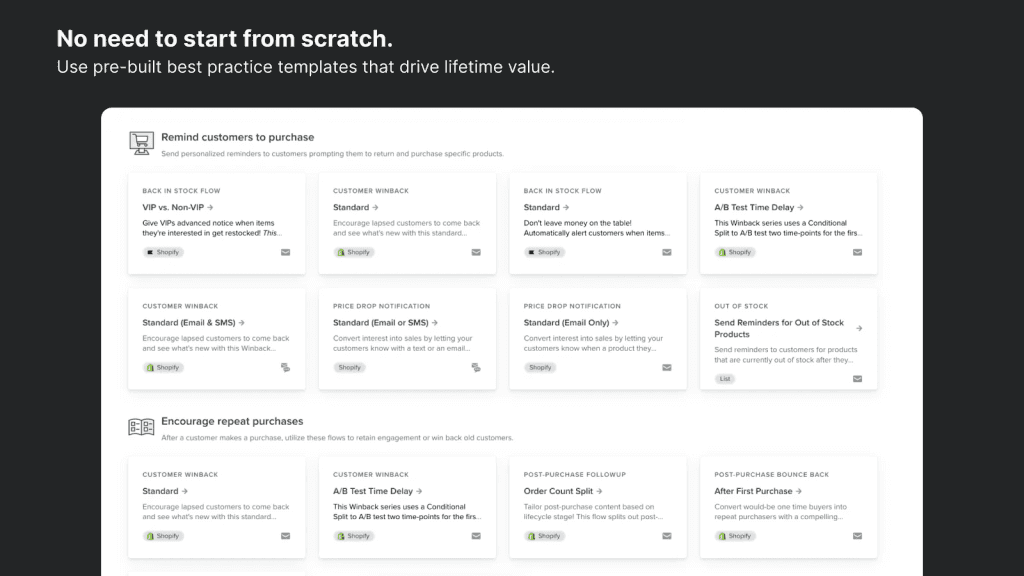
Automation has evolved from basic welcome flows to complex lifecycle orchestration. The strongest providers enable brands to design behavior-based journeys that move customers from awareness to repeat purchase automatically. Seamless automation is no longer a luxury; it is the foundation of sustainable growth.
2. Segmentation and personalization at scale
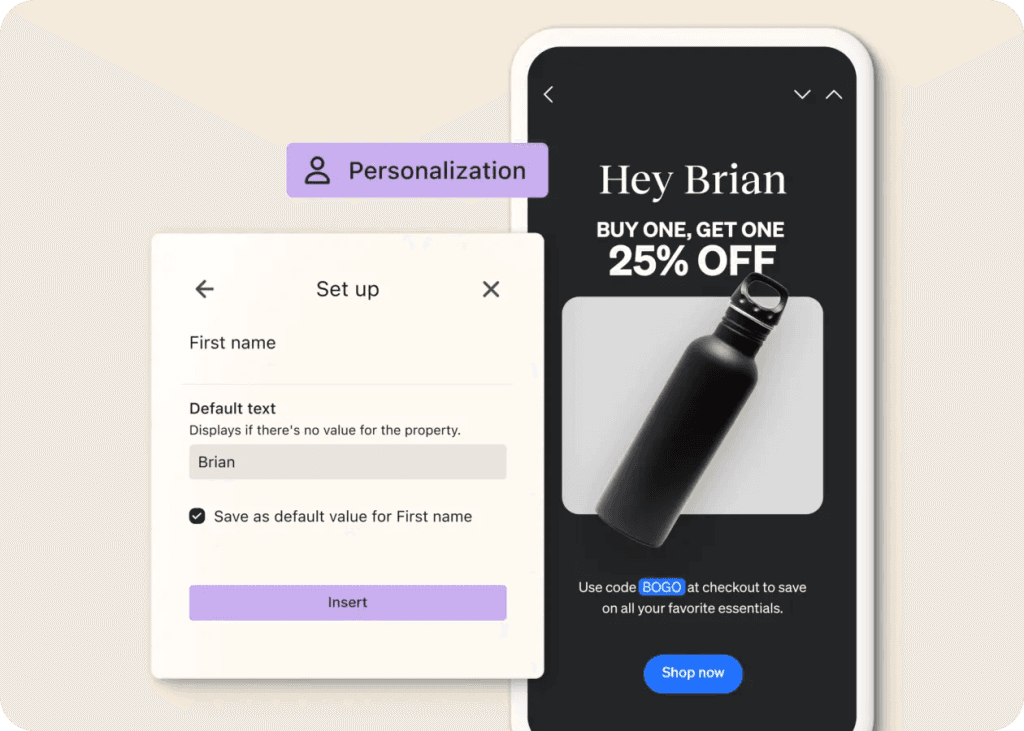
Generic messaging has no place in eCommerce. Leading platforms leverage real-time data, such as purchase frequency, browsing history, and predicted lifetime value, to deliver hyper-personalized content. The ability to maintain relevance across tens of thousands of contacts is what separates the best-in-class solutions from the rest.
3. Integration that keeps data in motion
In 2026, marketing stacks are interconnected ecosystems. Providers must integrate deeply with commerce platforms like Shopify, marketplaces, and CRMs such as HubSpot or Salesforce. This ensures campaigns are powered by unified data, enabling marketing teams to act instantly on customer behavior.
Beyond functionality: the role of AI and compliance
AI maturity as a competitive advantage
Artificial intelligence now defines how efficiently a platform can operate. From predictive segmentation and send-time optimization to AI-generated content, leading providers empower marketers to achieve more with less manual effort. This shift allows brands to anticipate customer intent rather than simply react to it.
Compliance and data protection
With privacy laws like GDPR, CCPA, and the Digital Markets Act continuing to evolve, compliance has become a core selection criterion. The best email marketing providers embed consent management, audience anonymization, and data portability within their systems, protecting both merchants and customers while maintaining trust at scale.
Emerging trends shaping 2026
Email marketing is evolving fast, shaped by AI innovation, new data regulations, and changing consumer behavior. The best email marketing providers for eCommerce in 2026 are not just keeping up with these trends, they are defining them.
1. Predictive intelligence and AI-driven personalization
Artificial intelligence has transformed how eCommerce brands communicate. Predictive analytics can now anticipate customer intent, allowing brands to serve the right message at the exact moment of decision. From Klaviyo’s AI-powered churn predictions to HubSpot’s content assistant, platforms are moving from “reactive” to “anticipatory” marketing.
2. Unified data ecosystems
The separation between CRM, marketing automation, and eCommerce data is disappearing. Platforms that provide a unified view, integrating sales, support, and marketing touchpoints, will lead in 2026. This shift enables merchants to measure the true impact of every email and maintain a consistent customer experience across channels.
3. Cross-channel orchestration
The strongest providers now go beyond email to create interconnected customer journeys across SMS, push notifications, and even on-site personalization. For example, Omnisend and Attentive help brands connect email and SMS flows within a single dashboard. This holistic approach ensures consistent messaging throughout the customer lifecycle.
4. AI-assisted creativity
Generative AI tools are reshaping the creative process. Marketers can now test dozens of subject lines, personalize visuals, and automate A/B testing within minutes. However, the winning strategy lies in balancing AI efficiency with human insight, ensuring that creativity enhances brand authenticity rather than replacing it.
5. Privacy-first marketing
As data collection becomes increasingly restricted, consent-driven marketing is becoming the new norm. Providers that combine transparency, zero-party data, and strong compliance frameworks will earn long-term trust. This evolution marks the end of mass mailing and the rise of respectful, data-conscious communication.
Side-by-side comparison of email marketing providers for eCommerce
Choosing the right platform is not just about features, it’s about finding the one that matches your brand’s growth stage, automation needs, and ecosystem. The table below compares 20 of the best email marketing providers for eCommerce in 2026, evaluated on pricing, AI maturity, and integration depth.
Comparison table
Provider | Starting Price* | Best For | AI Maturity | eCommerce Depth | Key Integrations |
Mailchimp | $13/month | Small businesses | Basic | Medium | Shopify, WooCommerce, Salesforce, Zapier |
Klaviyo | $20/month | Shopify & DTC brands | Advanced | High | Shopify, Magento, BigCommerce |
Omnisend | $16/month | Omnichannel marketers | Advanced | High | Shopify, WooCommerce, Wix |
HubSpot | Free tier / $20+ | B2B & hybrid brands | Advanced | Medium | HubSpot CRM, Salesforce, Shopify |
Active Campaign | $19–30/month | Automation-heavy teams | Advanced | Medium | Shopify, WordPress, Salesforce |
Attentive | Custom pricing | Mobile-first brands | Advanced | High | Shopify, Magento, Salesforce |
PushOwl | Free up to 500 subs / $19+ | Shopify merchants | Basic | Low | Shopify |
Campaign Monitor | $11/month | Design-focused teams | Basic | Medium | Shopify, WooCommerce, Salesforce |
MailerLite | $10/month | Small eCommerce teams | Moderate | Medium | Shopify, WooCommerce, Zapier |
GetResponse | $19/month | Multi-channel marketers | Moderate | Medium | Shopify, WooCommerce, Magento |
ConvertKit | $15/month | Creators & small brands | Basic | Low | Shopify, WordPress, Teachable |
Drip | $39/month | DTC eCommerce | Advanced | High | Shopify, WooCommerce, Magento |
Moosend | $9/month | Budget-conscious brands | Moderate | Medium | Shopify, WooCommerce, Zapier |
Benchmark Email | $13/month | Simplicity-first users | Basic | Low | Shopify, WooCommerce |
Constant Contact | $12/month | SMBs | Basic | Medium | Shopify, WooCommerce, Eventbrite |
Sendinblue (Brevo) | $25/month | All-in-one marketing | Advanced | Medium | Shopify, WooCommerce, Zapier |
AWeber | $19/month | Small online shops | Basic | Medium | Shopify, WooCommerce, WordPress |
Salesforce Marketing Cloud | Custom | Global enterprises | Enterprise | High | Salesforce, Shopify |
Emarsys | Custom | Enterprise retail | Enterprise | High | Shopify, Magento, Salesforce |
Iterable | Custom | Large-scale DTC | Enterprise | High | Shopify, Salesforce, Segment |
Note: Pricing reflects publicly available starting plans as of 2025 and may vary by contact volume, features, or region. Please refer to each provider’s official website for up-to-date details.
Need help evaluating which platform fits your eCommerce stack? Discover how Flatline helps brands make the right tech choice.
Provider highlights
Below is a closer look at each platform’s unique positioning within the eCommerce landscape. While all 20 providers bring value, their strengths differ depending on your goals, scale, and technology stack.
Mailchimp
Mailchimp remains one of the most recognized platforms in the market, known for its intuitive design and entry-level affordability starting at $13/month. While it integrates well with Shopify and WooCommerce, its automation depth and AI capabilities are limited compared to eCommerce-focused solutions. Best suited for small businesses entering email marketing for the first time.
Klaviyo
Klaviyo Klaviyo continues to set the benchmark for eCommerce retention marketing. With pricing starting at $20/month, its predictive analytics, churn modeling, and deep Shopify integration make it ideal for data-driven brands that want to automate at scale.
Omnisend
Omnisend excels in omnichannel automation combining email, SMS, and push notifications within a single platform. Starting at $16/month, it’s a strong choice for Shopify stores seeking a unified customer journey across multiple touchpoints.
HubSpot
HubSpot connects email directly with CRM and sales data, offering free and paid plans starting from $20/month. With built-in AI personalization and deep CRM insights, it’s a top choice for hybrid brands managing both B2B and B2C pipelines.
ActiveCampaign
ActiveCampaign is praised for its advanced automation and segmentation. Starting at $15/month, it integrates with Shopify, WordPress, and Salesforce. Its AI tools for predictive sending and lead scoring help prioritize outreach, though users often mention the steep learning curve. Once mastered, it offers more flexibility than many competitors.
Attentive
Attentive offers one of the most powerful automation engines in the industry, with pricing starting around $19/month. Its predictive sending and lead scoring help merchants maintain precision personalization as databases grow.
PushOwl
PushOwl focuses on web push notifications rather than traditional email. Free for up to 500 subscribers, it complements larger automation stacks by covering cart recovery and back-in-stock campaigns directly within Shopify.
Campaign Monitor
Campaign Monitor is known for its elegant design interface and reliable deliverability. Starting at $11/month, it serves design-focused teams that value branding consistency, though its AI features remain basic.
MailerLite
MailerLite offers a clean, affordable interface starting at $10/month. While simple, its AI-powered automation features help small eCommerce teams streamline workflows efficiently.
GetResponse
GetResponse combines email, landing pages, and automation in one platform, starting at $19/month. It’s particularly useful for brands managing campaigns across multiple regions or channels.
Kit (Formerly ConvertKit)
Kit is built for creators and smaller brands that value authenticity and community. Starting at $15/month, it integrates seamlessly with Shopify and WordPress but is less robust for enterprise automation.
Drip
Drip stands out for direct-to-consumer brands. Starting at $39/month, it provides predictive product recommendations, deep segmentation, and a strong Shopify focus, making it ideal for scaling eCommerce teams.
Moosend
Moosend is one of the most cost-effective solutions, starting at $9/month. It offers AI-based analytics and send-time optimization, giving smaller merchants access to smart automation without enterprise pricing.
Benchmark Email
Benchmark Email focuses on simplicity and usability, starting at $13/month. While its AI tools are limited, its straightforward workflows make it suitable for teams with smaller lists or lighter automation needs.
Constant Contact
Constant Contact has served small businesses for decades. Starting at $12/month, it remains a reliable choice for straightforward campaigns but lacks the predictive analytics of modern providers.
Brevo
Brevo (formerly Sendinblue) offers an all-in-one marketing suite, starting at $25/month. Its AI-enhanced content generation and multi-channel automation make it a flexible mid-market solution.
AWeber
AWeber starts at $19/month and remains a consistent performer among small businesses. While not as advanced in AI, it provides stability and excellent deliverability.
Salesforce Marketing Cloud
Salesforce Marketing Cloud is designed for enterprise-level organizations. Pricing is custom, but its “Einstein AI” tools provide advanced personalization, predictive insights, and enterprise-scale orchestration.
Emarsys
Emarsys (part of SAP) (part of SAP) is purpose-built for enterprise retail. It integrates deeply with eCommerce platforms and CRMs to deliver AI-driven personalization at scale, making it a preferred choice for global retail brands.
Iterable
Iterable is an enterprise-grade platform with advanced journey orchestration and cross-channel automation. With custom pricing, it’s ideal for large-scale DTC brands that require deep data control and scalability.
Wrapping up the provider overview
With 28 email marketing providers compared side by side, it becomes clear that there is no universal “best” option. Platforms like Klaviyo and Omnisend stand out for eCommerce because of their deep integrations and AI capabilities, while enterprise players such as Salesforce Marketing Cloud, Oracle Responsys, and Adobe Campaign are tailored for global operations. On the other hand, budget-friendly tools like MailerLite and Moosend remain attractive for smaller stores that prioritize cost over advanced automation.
Yet comparing features and pricing tables is only one part of the decision. What truly matters is how well a provider aligns with your business goals, technical stack, and customer journey. The next step is to break down the key factors every eCommerce manager should weigh when choosing an email marketing provider.
Key factors to compare before choosing a platform
Evaluating the best email marketing providers for eCommerce goes beyond feature lists. The real decision lies in how each platform aligns with your brand’s growth stage, operational complexity, and long-term customer goals. Below are the factors that should guide every comparison.
1. Pricing models and scalability
Pricing can be deceptive. A plan that looks affordable for 1,000 contacts may become costly as your list expands to 50,000. Evaluate how pricing scales with both subscribers and advanced features like automation, SMS, or AI. The best providers offer flexibility, letting you grow without unexpected cost spikes.
2. Integration depth and ecosystem fit
Your email marketing tool should operate as part of your larger ecosystem, not in isolation. For Shopify-based brands, providers like Klaviyo and Omnisend offer deep integrations that sync product, order, and customer data in real time. If your business runs on Salesforce or HubSpot, CRM-driven providers will deliver far greater efficiency and data alignment.
3. Automation and AI readiness
Automation defines the efficiency of modern eCommerce operations. Platforms that pair behavioral triggers with predictive analytics, such as churn prevention or product recommendations, allow brands to move from reactive to proactive engagement. Look for AI maturity that supports personalization at scale, not just basic scheduling.
4. Ease of use and team adoption
Complexity kills adoption. The most advanced system will underperform if your team finds it difficult to navigate. Consider how quickly your team can build and deploy campaigns. Tools like MailerLite or Campaign Monitor emphasize simplicity, while HubSpot and ActiveCampaign provide depth for data-driven teams that can handle more sophistication.
5. Data privacy and compliance
With the Digital Markets Act, GDPR, and CCPA reshaping how brands handle data, compliance is now a competitive advantage. Leading platforms include built-in consent management, audience anonymization, and regional compliance tools, helping you maintain trust while scaling globally.
6. Support and implementation resources
Support quality often separates top-tier providers from budget tools. Evaluate whether your plan includes onboarding specialists, live chat, or dedicated partner support. Enterprise-focused tools like Salesforce Marketing Cloud and Emarsys offer full-service onboarding, while mid-tier providers may rely more on documentation and community forums.
How to choose the best provider for your eCommerce brand
With dozens of email marketing providers competing for your attention, the most effective way to decide is through structured evaluation. Rather than chasing features, focus on how each platform supports your long-term strategy, your data, workflows, and customers.
Step 1: Define measurable goals
Start by clarifying what success looks like. Is your objective retention, repeat purchase rate, or lead conversion? For example, DTC brands may prioritize lifecycle automation and churn reduction, while B2B organizations focus on CRM-driven nurturing. A clear goal filters out platforms that do not align with your KPIs.
Step 2: Map your tech stack and integration needs
Every eCommerce brand operates within an existing ecosystem, Shopify, ERP, CRM, and analytics. Test how each platform connects to that stack. Klaviyo, for instance, offers real-time Shopify data syncing, while HubSpot excels at centralizing CRM and email operations. Weak integrations often lead to siloed data and inconsistent customer experiences.
Step 3: Assess automation and AI capabilities
Evaluate whether the platform’s automation features move beyond static triggers. AI-driven providers predict customer intent, optimize send times, and automate segmentation dynamically. This helps brands deliver personalized communication without relying on manual rule creation.
Step 4: Evaluate total cost of ownership
The entry price is only part of the equation. Factor in team training, migration, and potential add-ons such as SMS or customer data platforms (CDPs). Scalable solutions are those that remain cost-effective even as your subscriber base and automation complexity grow.
Step 5: Test usability with real campaigns
Run a 30-day pilot with one or two shortlisted platforms. Track deliverability, automation reliability, and team adoption. This test reveals not just which tool is more powerful, but which one truly fits your workflows and brand cadence.
Step 6: Align with your brand’s data and compliance standards
Before committing, ensure your chosen provider complies with all relevant data protection laws and supports regional data storage if necessary. This is essential for maintaining consumer trust and brand reputation at scale.
Why Klaviyo stands out for eCommerce
Within the landscape of 2026, Klaviyo continues to lead the conversation around data-driven retention marketing. What sets it apart is not just its features, but how those features are designed specifically for commerce.
Klaviyo’s foundation lies in deep, real-time integrations with Shopify, Magento, and BigCommerce, connecting every touchpoint from product views to repeat purchases. This connection turns raw transactional data into actionable intelligence. Brands can predict churn, forecast purchase behavior, and automate hyper-personalized campaigns that align with each customer’s lifecycle.
While most platforms offer segmentation, Klaviyo elevates it through predictive analytics and AI modeling. Merchants can build audiences based on likelihood to purchase, predicted lifetime value, or engagement decay, all powered by machine learning. This capability helps marketing teams maintain precision personalization even as customer bases scale globally.
Its scalability is another key strength. Many brands start with Klaviyo’s free or entry-level plans and continue to grow without the need for re-platforming. This continuity makes it one of the most sustainable long-term investments for eCommerce marketing teams.
From Flatline’s experience working with global Shopify Plus brands, Klaviyo consistently delivers measurable results in retention, customer lifetime value, and automation efficiency. It’s not simply an email tool, it’s a data engine that enables brands to turn insight into impact.
HubSpot for CRM-driven email in B2B and hybrid models
While Klaviyo dominates retention-driven eCommerce, HubSpot distinguishes itself through its ability to unify marketing and sales data within a single ecosystem. For hybrid brands that balance DTC and B2B operations, or for teams managing longer customer lifecycles, HubSpot provides the structure to scale without fragmentation.
Its strength lies in CRM-native automation. Every campaign, workflow, and trigger is connected to real-time contact and deal data. This means email sequences can respond instantly to changes in the sales pipeline, service tickets, or account activity. Instead of marketing in isolation, teams operate with complete visibility into each customer’s journey.
HubSpot’s AI-powered tools further streamline execution. The platform’s content assistant accelerates campaign creation, while predictive lead scoring helps teams focus on high-intent prospects. The result is not just faster marketing, but smarter alignment between sales and customer experience.
From Flatline’s implementations across both B2B and eCommerce brands, HubSpot has proven to be the bridge between marketing performance and CRM intelligence. It enables organizations to deliver personalized communication while maintaining operational precision, a key requirement for brands expanding globally.
Final thoughts on choosing the right email marketing provider
The market for email marketing providers in 2026 is broader and more competitive than ever. From entry-level tools to enterprise ecosystems, each platform offers strengths that align with different business models. The challenge for eCommerce managers is not finding the “best” tool overall, but identifying the one that fits their goals, scale, and customer journey.
What matters most are the fundamentals: automation strength, personalization capabilities, AI readiness, seamless integration with your systems, and compliance with evolving data privacy regulations. These are the pillars that determine whether a provider becomes a long-term growth partner or a short-term fix.
As a Shopify Platinum Partner, Klaviyo Platinum Partner, Framer Enterprise Partner and HubSpot Gold Partner, Flatline works closely with leading platforms to help brands design retention ecosystems that connect every touchpoint, from data to delivery. Our perspective is shaped by years of implementation and optimization for global eCommerce brands. The result: strategies that turn automation into loyalty, and data into growth.
In 2025, Flatline was named Rising Star Agency Partner of the Year (EMEA) at the Klaviyo K:Partners Awards in Boston, a recognition of our role as one of only 20 agencies worldwide on the Klaviyo Advisory Council. It marks our ongoing commitment to helping brands elevate retention, performance, and personalization at scale. Four platforms. Four top-tier partnerships. One unwavering standard. This is what The Luxury Standard in Digital looks like.
Ready to find the platform that fits your brand?
Let’s talk about how your marketing stack can work harder for you, whether that means scaling Klaviyo automation, syncing HubSpot CRM, or mapping out a smarter migration path. Connect with Flatline.
Related articles


F.A.Q.

What is the best email marketing platform for eCommerce?
There is no single best platform; it depends on your growth stage, tech stack and goals. For Shopify and DTC brands, Klaviyo is the benchmark thanks to real-time store data and predictive analytics. Omnisend suits brands that want email, SMS and push in one place, HubSpot fits B2B and hybrid models, and enterprise retailers often look at Salesforce Marketing Cloud, Emarsys or Iterable.
Klaviyo or Mailchimp: which is better for an online store?
For most growing online stores, Klaviyo. It syncs product, order and customer data from platforms like Shopify in real time and uses that data for predictive segmentation, churn predictions and automated flows. Mailchimp is easy to use and affordable for businesses just starting with email, but its automation and AI capabilities are more limited than those of platforms built for eCommerce.
Should you choose Klaviyo or HubSpot?
Choose based on where your customer data lives. Klaviyo is built for retention in eCommerce, with real-time store data driving personalized flows and predictions. HubSpot connects email to CRM, sales pipeline and service data, which makes it stronger for B2B and hybrid brands with longer sales cycles. Some brands use both, for example Klaviyo for the online store and HubSpot for B2B sales.
What should you look for in an email marketing provider?
Look at six factors: how pricing scales as your list grows, how deeply it integrates with your store and CRM, how mature its automation and AI are, how easily your team can use it, whether consent management and GDPR compliance are built in, and how much support and onboarding you get. A 30-day pilot with one or two shortlisted platforms shows which one fits your workflows.
How much does an email marketing platform cost?
Most platforms charge by number of contacts or emails sent, so a plan that looks cheap at 1,000 contacts can become expensive at 50,000. As of September 2026, entry plans start around $9 to $20 per month for a few hundred contacts, several tools have a free plan, and enterprise platforms work with custom pricing. Also budget for SMS, migration and training.